1.43 Million-Year-Old Footprints Reveal Details About Prehistoric Human Cousin Paranthropus Boisei
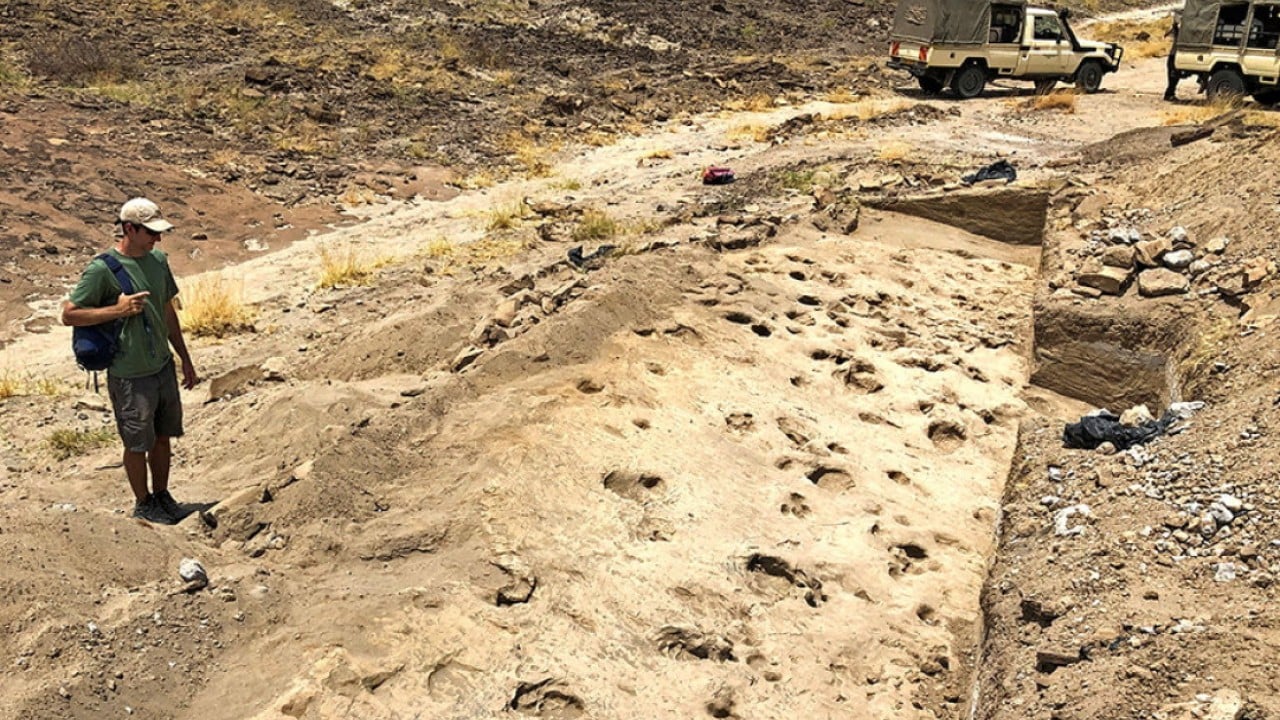
Footprints discovered on the shores of Lake Turkana in northern Kenya, dating back approximately 1.43 million years, are offering fresh insights into the Paranthropus boisei species. This species, a cousin in the human evolutionary lineage, was the last of its kind and is primarily known from fossilized skulls and teeth. The newly identified 21 footprints were made by eight individuals, providing information about their size and behavior. Paranthropus boisei possessed significant anatomical adaptations suited for consuming tough plant materials. The research was conducted by scientists working along the eastern side of Lake Turkana. These fossilized tracks offer a rare glimpse into the locomotion and physical characteristics of this ancient hominin, complementing the existing fossil record.
The discovery of Paranthropus boisei footprints offers valuable empirical data to complement the fossil record, allowing for a more nuanced understanding of hominin locomotion and behavior. Analyzing these tracks can illuminate biomechanical adaptations and social dynamics, such as group size and movement patterns, within this extinct species. Such findings contribute to broader discussions on the diversity of hominin species and their ecological niches during the Pleistocene epoch. Understanding the evolutionary pressures that led to specialized diets and unique anatomical features in species like Paranthropus boisei can provide insights into the complex adaptive strategies employed by our ancestors and the factors that ultimately led to their extinction, potentially highlighting the trade-offs between specialization and long-term survival in changing environments.
AI-generated to prompt reflection — not editorial opinion, not advice, not a statement of fact. How this works.