10-Year-Old Ukrainian Gymnast Who Lost a Leg Meets Brazilian Stars in Rio
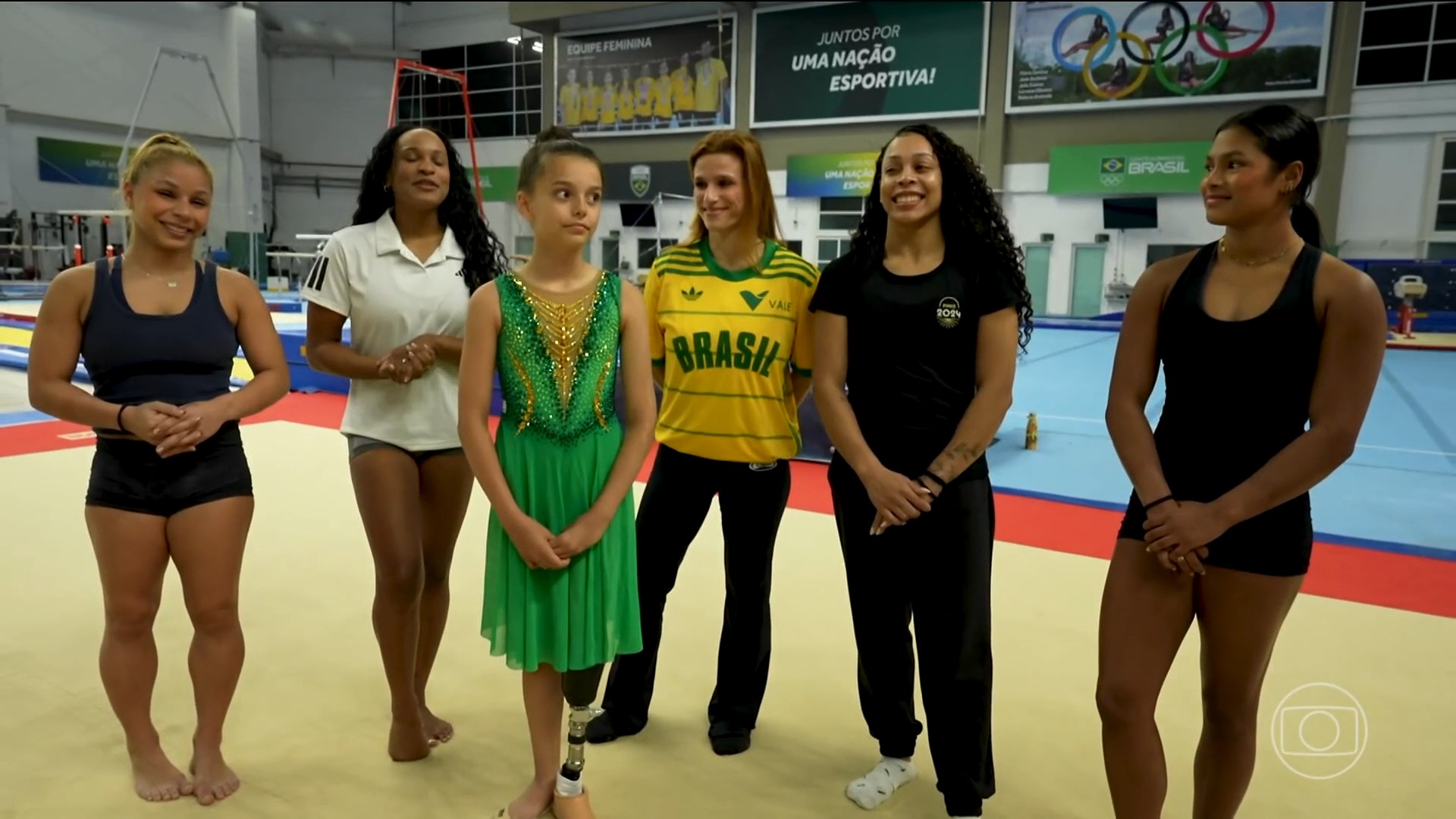
Ten-year-old Ukrainian gymnast Oleksandra Paskal, a survivor of the war in Ukraine, recently had a special day during a visit to Rio de Janeiro. She met some of her sporting idols, including Rebeca Andrade, Jade Barbosa, and other members of the Brazilian artistic gymnastics team, at the training center for Brazilian Olympic athletes. Oleksandra, known as Sasha, practices rhythmic gymnastics and lost her left leg in 2022 at the age of six due to a Russian missile explosion in Zatoka, Ukraine. Since then, she has found strength in sports to pursue her dreams. Jade Barbosa commented on how the meeting highlighted the power of sports, while Rebeca Andrade expressed her own nervousness and joy in witnessing Sasha's journey. Sasha performed for the Brazilian gymnasts, earning applause, and shared her dream of competing in the Paralympics, hoping rhythmic gymnastics will be included in the 2032 Games. She attended the Paris Olympics as a spectator, cheering for Rebeca Andrade and other Brazilian medalists. Oleksandra is in Brazil to perform in the 'Dance of Freedom' show, which has already toured Paris and New York and will continue to Nairobi and Tokyo. Her mother, Maria Paskal, stated that the show aims to convey a message of peace and acknowledge the children lost in the ongoing conflict. Sasha continues to overcome war-imposed challenges and build new aspirations through sport, taking with her the memory of meeting her inspirations and receiving a hug from the Brazilian athletes.
This event highlights the profound impact of conflict on individuals, particularly young athletes, and the unifying power of sport as a platform for resilience and inspiration. The narrative emphasizes the personal journey of Oleksandra Paskal, framing her as a symbol of hope overcoming adversity. From a systemic perspective, the story underscores the broader implications of geopolitical conflict on civilian populations and the long-term psychological and physical toll it exacts. The inclusion of her aspirations for the Paralympics points to evolving inclusivity in sports, while the 'Dance of Freedom' initiative serves as a cultural diplomacy tool, using artistic expression to advocate for peace and raise awareness about the ongoing war's human cost. This intersection of personal struggle, athletic achievement, and global advocacy offers a lens through which to view the enduring human spirit and the potential for sport to transcend political divides.
AI-generated to prompt reflection — not editorial opinion, not advice, not a statement of fact. How this works.