100 km/h Winds Topple Power Tower in Taquaritinga, SP, Leaving 69% of City Without Electricity
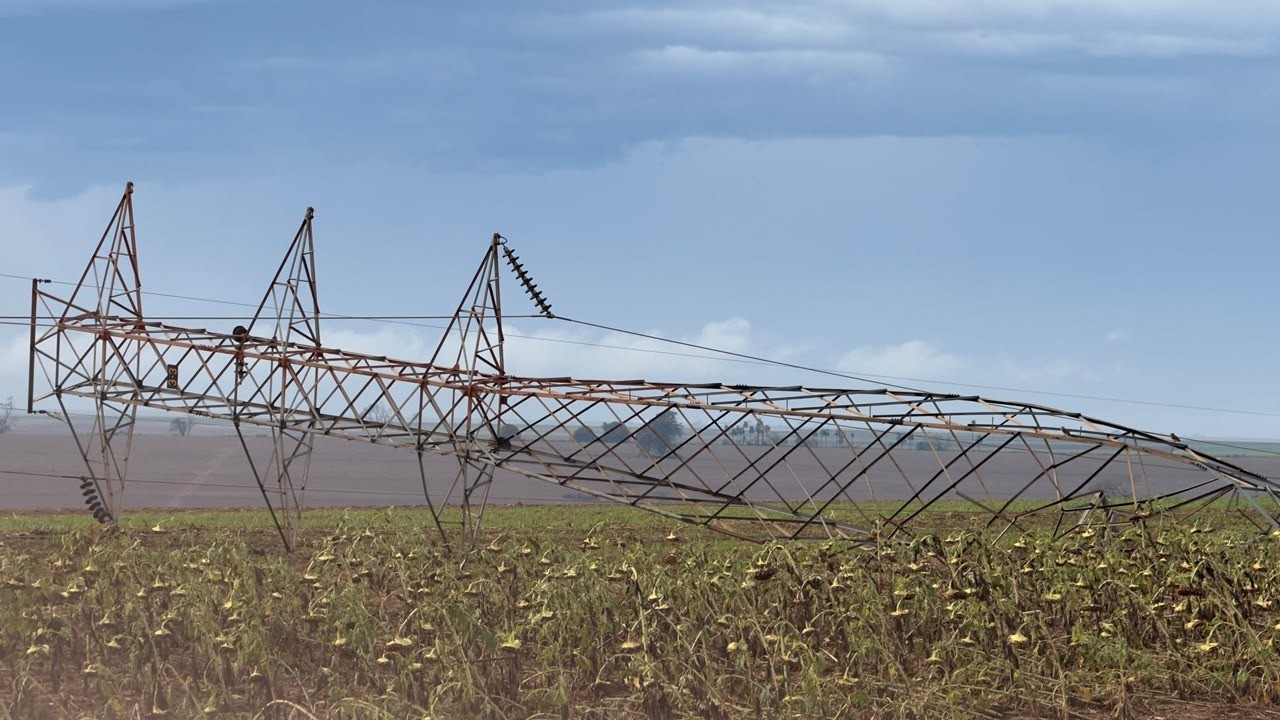
A severe storm with winds estimated at 100 km/h struck Taquaritinga, São Paulo, early Friday, August 24th, causing widespread damage and significant power outages. The storm's intensity led to the toppling of a high-voltage power tower in the rural area, impacting electricity supply for 68.94% of the city. Additionally, strong gusts damaged buildings, ripped roofs off homes, and felled trees across various neighborhoods. The Municipal School of Basic Education (EMEB) Estevam Schlobach Salvagni suffered extensive damage, resulting in the suspension of classes until August 28th. The storm also affected telecommunications and internet services, and led to the temporary closure of a section of the Rodovia Washington Luís (SP-310) due to fallen trees. In response to the extensive damage, Mayor Fulvio Zuppani declared a state of emergency. Emergency services, including the Civil Defense and Fire Department, are on the ground assessing the damage and assisting residents. While no human casualties were reported, agricultural producers in the rural areas experienced losses, particularly in lemon crops. The Municipal Government has mobilized various departments to mitigate the impacts and restore normalcy, urging residents to exercise caution during the ongoing unstable weather conditions.
The event highlights the vulnerability of critical infrastructure, like high-voltage power transmission towers, to extreme weather events, which are projected to increase in frequency and intensity due to climate change. The widespread power outage underscores the interconnectedness of energy grids and the cascading effects on essential services such as communication and water. The declaration of a state of emergency reflects the immediate need for robust disaster response and recovery protocols. Looking ahead, investments in grid modernization, climate-resilient infrastructure, and advanced early warning systems will be crucial for mitigating future disruptions and ensuring community safety and economic stability in the face of escalating environmental challenges.
AI-generated to prompt reflection — not editorial opinion, not advice, not a statement of fact. How this works.