11-meter Devil statue built in Ceará, Brazil; creator claims it's world's largest
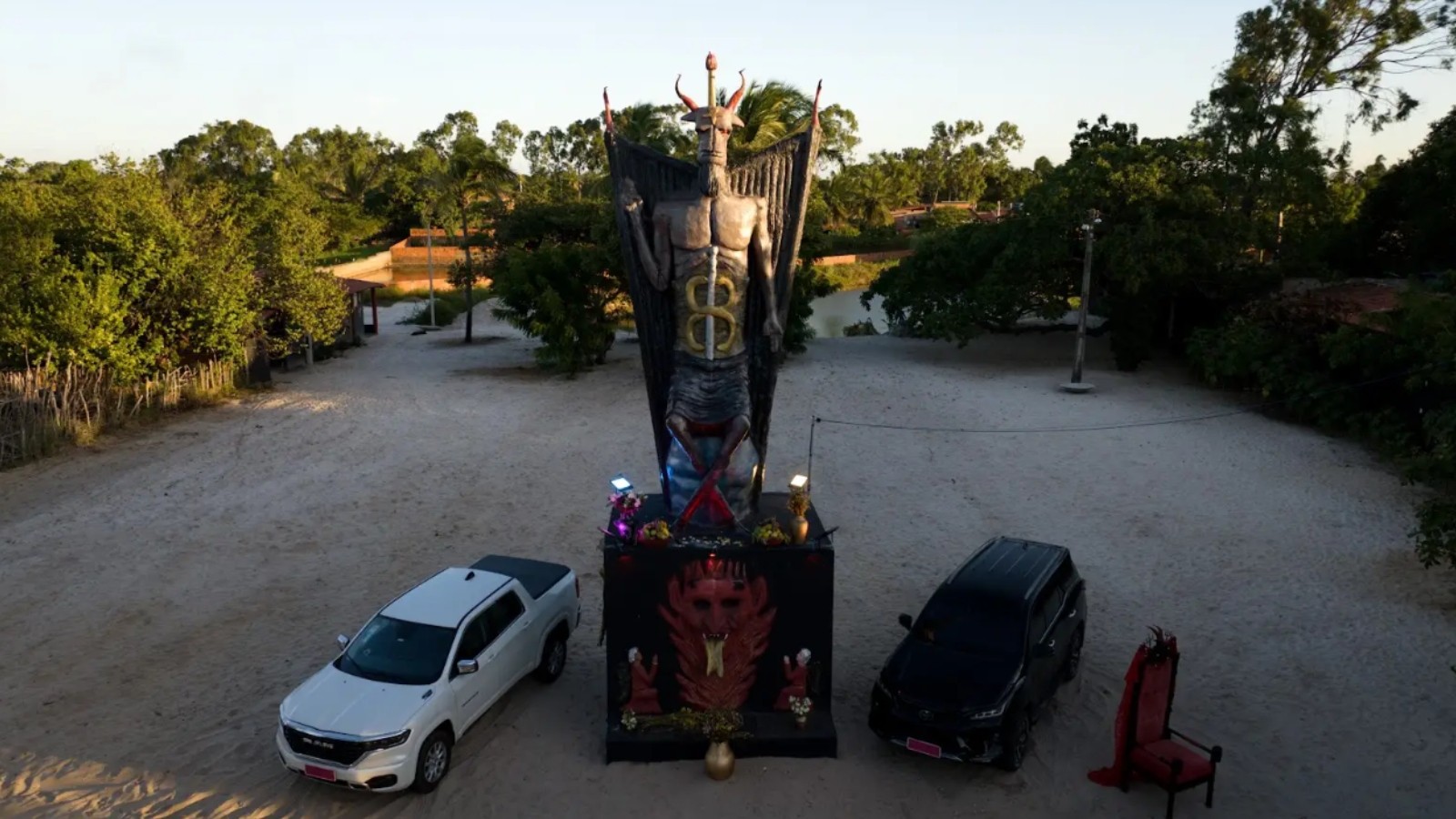
An 11-meter-tall statue dedicated to the Devil has been erected in Taíba, a coastal district within São Gonçalo do Amarante, Ceará, Brazil. The monument, located on private property belonging to the creator, Mãe Rainha das Trevas, cost over R$100,000, funded entirely by her. Mãe Rainha das Trevas, a practitioner of Quimbanda, stated that the statue is the largest of its kind globally and was inaugurated during a ceremony celebrating the 29th anniversary of her religious temple, Palácio Estrela Negra da Quimbanda, on July 25th. The construction received environmental and urban planning approval from local authorities, who confirmed compliance with all relevant legislation. The statue was designed by a civil engineer, though the construction timeline was not disclosed. Mãe Rainha das Trevas, who has nearly 800,000 followers on Instagram, has faced religious intolerance and prejudice due to her beliefs, but she emphasizes her right to religious freedom in a secular country and advocates for mutual respect. She previously led a religious space known as 'Casa dos Caixões' in Fortaleza before relocating to Taíba. The Palácio Estrela Negra da Quimbanda hosts monthly rituals and celebrations, attracting 200-300 attendees. Despite online criticism, she feels secure in her community, which she states respects her faith. She also highlighted charitable activities, including annual donations of meat and toy distributions for Children's Day. Quimbanda, described as a cult focused on entities like exus and pombagiras, is not formally recognized as a religion in Brazil and is often misunderstood as malevolent, though practitioners view it as a path to spiritual evolution and ancestral connection.
The construction of a large statue dedicated to the Devil in Brazil highlights the intersection of religious freedom, cultural perception, and regulatory compliance. While the creator asserts her right to express her faith and claims the statue is the world's largest, the event also brings attention to the societal challenges faced by minority religious practices, particularly those perceived as unconventional or taboo. The official approval process, as detailed by the local government, suggests adherence to legal frameworks, yet the underlying tensions around religious prejudice persist. This situation prompts reflection on how societies balance individual liberties with collective sensitivities, especially in the digital age where visibility and potential for both support and backlash are amplified. Future considerations may involve how public spaces and private expressions of faith interact, and the ongoing dialogue needed to foster genuine religious tolerance beyond mere legal compliance.
AI-generated to prompt reflection — not editorial opinion, not advice, not a statement of fact. How this works.