112 Palestinian bodies recovered from Gaza rubble after 2023 Israeli airstrikes
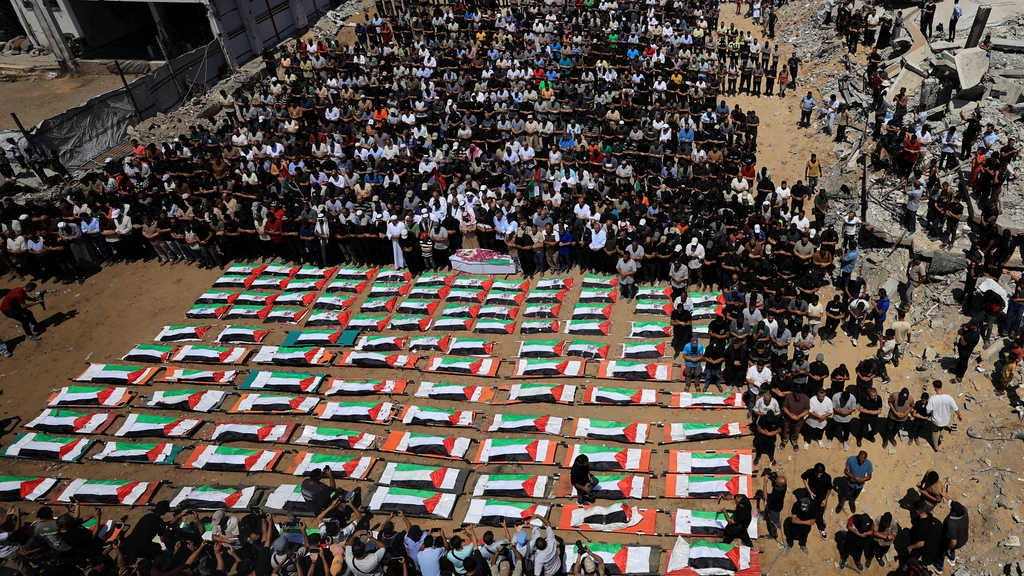
The bodies of 112 Palestinians, who perished in Israeli airstrikes in the autumn of 2023, have been recovered from rubble in Gaza and buried. These individuals belonged to the Abu Sharia al-Hassaina family, a clan comprising two intertwined families. Their remains were discovered only recently, approximately a month and a half after the Hamas attacks on October 7, 2023. The airstrikes targeted residential blocks in Gaza City on November 22, 2023, resulting in the deaths of around 300 Palestinians. While some bodies were found in the initial hours, many were buried too deep under the debris. Identification of the remains was achieved through clothing, jewelry, scars, and other physical characteristics. Thousands of Palestinians attended a funeral ceremony in Gaza City, where the bodies, placed in bags and adorned with Palestinian flags and photos, were laid out before a procession to the cemetery. The exact reason for Israel targeting this specific location remains unclear, with the Israeli military not providing a response to inquiries from the BBC and Reuters. The ongoing search for victims under destroyed buildings continues throughout Gaza. The Palestinian Ministry of Health estimates that over 73,000 Palestinians have been killed since the conflict began, with an additional 7,400 bodies believed to be still trapped under rubble. Despite an official ceasefire in place since October, Israeli attacks persist almost daily, leading to over 1,200 Palestinian fatalities since the truce.
This event highlights the devastating and indiscriminate impact of modern warfare on civilian populations and infrastructure. The prolonged delay in recovering bodies underscores the scale of destruction and the challenges in accounting for victims in conflict zones. The lack of transparency from the Israeli military regarding specific targeting decisions raises questions about adherence to international humanitarian law and the principles of distinction and proportionality. The ongoing conflict, even amidst reported ceasefires, perpetuates a cycle of violence and humanitarian crisis, with significant long-term implications for regional stability and the psychological well-being of affected communities. Future conflict resolution strategies must prioritize robust mechanisms for civilian protection, accountability for alleged violations, and transparent information sharing to mitigate such tragedies.
AI-generated to prompt reflection — not editorial opinion, not advice, not a statement of fact. How this works.
