1200 Competitors Gather in Arnhem for European Rubik's Cube Championship
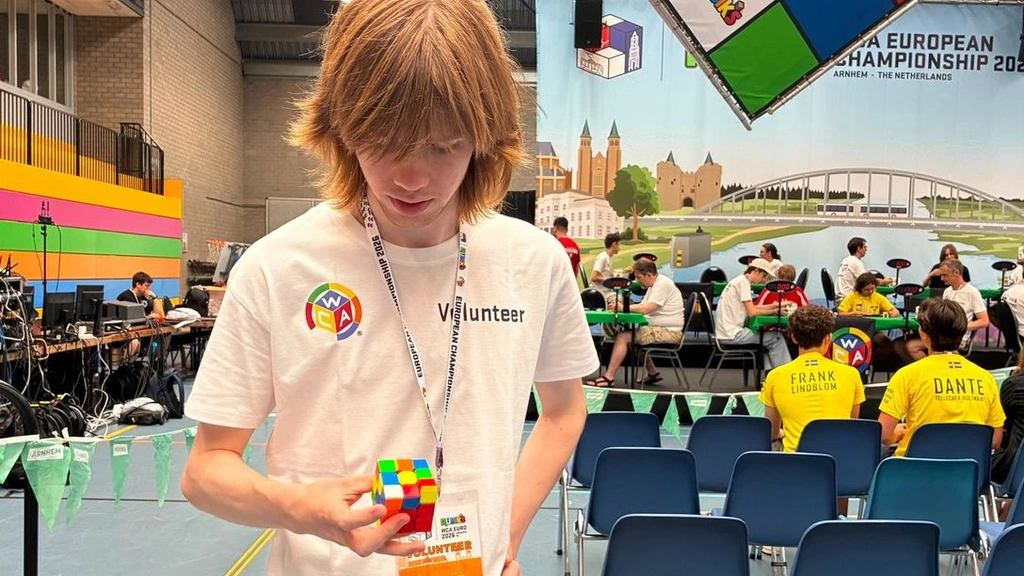
The European Championship of the Rubik's Cube is currently underway in Arnhem, Netherlands, bringing together 1200 participants from 53 countries. These speedcubers are competing to solve the iconic puzzle as quickly as possible. The Rubik's Cube, invented in 1974 by Hungarian Enro Rubik, was originally designed to teach art and design students about algebra. It has maintained its popularity across age groups since the 1980s. Competitions involve participants manipulating the colored blocks to align them on each side, with cubes featuring three to six rows of blocks. Organizer Yinte Dik emphasizes that learning to solve the cube is accessible to everyone, regardless of prior experience. Amiel Engel, a 21-year-old competitor from Nijmegen, has been participating in such events for nearly a decade and highlights the strong sense of community among participants. This year's championship includes specialized rounds, such as solving the cube with one hand or while blindfolded, with Engel participating in the one-handed competition. The event features both national teams and individual competitors, underscoring the intense concentration required for speedcubing, where matches are often decided by fractions of a second. The current world record stands at 2.76 seconds, set by a 9-year-old Polish boy earlier this year. The last Dutch record holder was Mats Valk in 2016. Marta Fernandes Cid, a 21-year-old participant from Portugal, expressed her amazement at how a simple toy can unite so many people, describing the atmosphere as friendly and devoid of ego. She also shared that cubing serves as a therapeutic outlet for stress and anger. The championship is scheduled to conclude on Sunday.
This European Rubik's Cube Championship showcases a global community united by a shared, accessible puzzle, transcending national and age barriers. The event highlights the emergent subculture of speedcubing, where dedication and practice translate into remarkable feats of dexterity and concentration, measured in fractions of a second. From a systems perspective, the continued appeal of the Rubik's Cube over decades suggests an enduring human inclination towards problem-solving and pattern recognition, amplified by digital communities and accessible competition formats. As AI increasingly automates complex tasks, the value placed on human manual dexterity and focused cognitive processing in niche, skill-based activities like speedcubing may evolve. The event also implicitly demonstrates the power of simple, tangible interfaces in fostering social connection and personal well-being, a contrast to the often abstract nature of digital interactions.
AI-generated to prompt reflection — not editorial opinion, not advice, not a statement of fact. How this works.