13 Nurse Sharks Enter Monitored Area in Fernando de Noronha
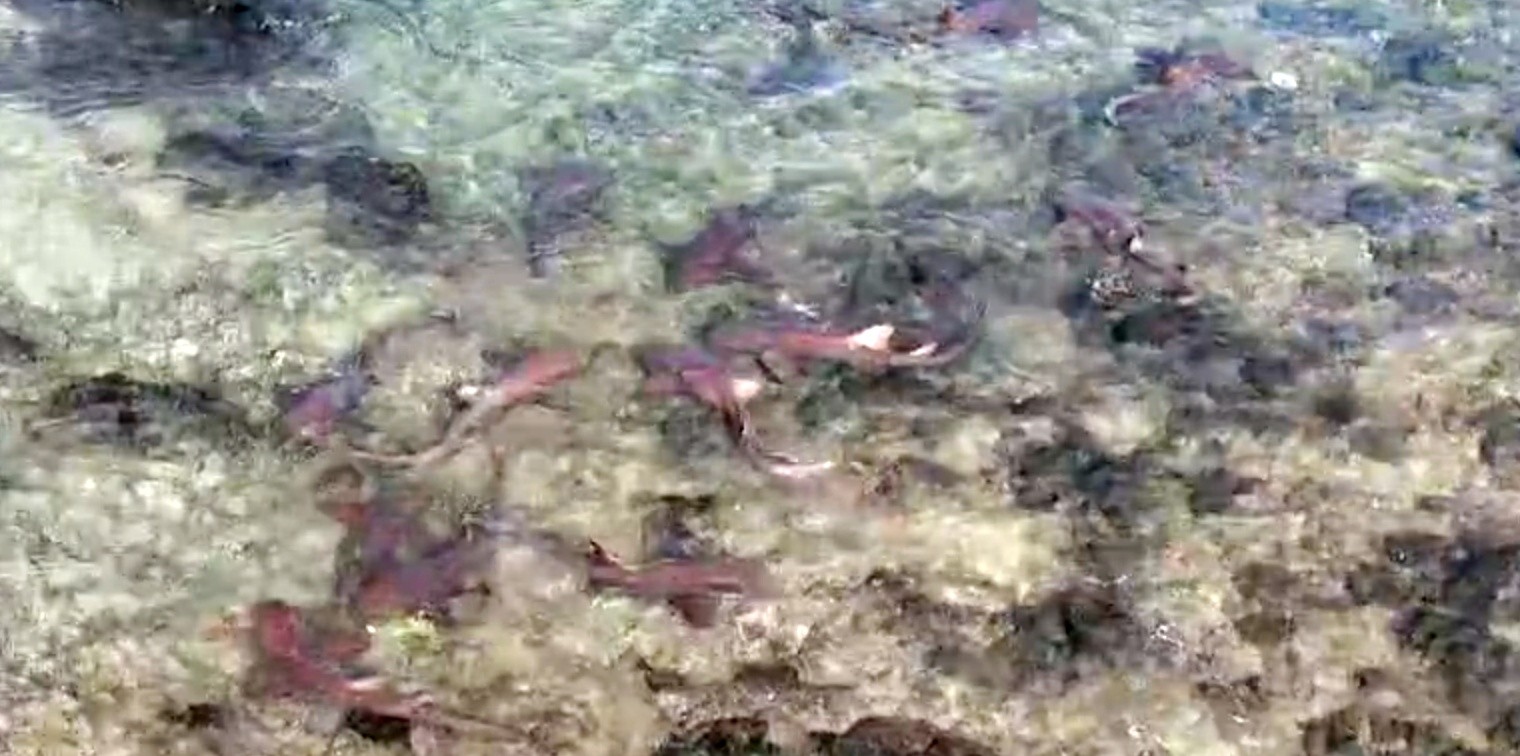
Researchers from the Ecotuba Project at the Federal Rural University of Pernambuco (UFRPE) have released drone footage showing 13 nurse sharks entering a monitored area known as Alagados dos Tubarões in Fernando de Noronha. The sharks were observed navigating past rocks to access the bay near Porto de Santo Antônio. This observation is part of an ongoing research initiative launched this year to understand why these sharks frequent the cove between June and September. Initial findings suggest the area may serve as a refuge for pregnant females in the early stages of gestation, though this hypothesis is still under investigation. The sharks, identified as Ginglymostoma cirratum, appear to utilize high tides to enter the bay. The monitoring process involves field observations, animal capture for research, and ultrasound examinations. During the initial assessment phases, researchers identified four females in the early stages of pregnancy. This discovery prompted the formulation of a new hypothesis regarding the area's use. Lead researcher Mariana Rêgo explained that the primary theory is that females use the Alagados to regulate their body temperature. The shallow waters warm quickly under the sun, and the surrounding rocks also retain heat, potentially creating favorable conditions for early gestation. Rêgo added that this warming could aid crucial developmental processes for the pregnancy, and the consistent presence of pregnant females reinforces the need for expanded monitoring and data collection. This study builds upon 12 years of shark monitoring in Fernando de Noronha by UFRPE researchers, which includes boat expeditions for capturing sharks, fitting transmitters, and tracking their movements. The project is a collaboration with the Fernando de Noronha Administration and has authorization from the Chico Mendes Institute for Biodiversity Conservation (ICMBio).
The observed behavior of nurse sharks utilizing the Alagados dos Tubarões in Fernando de Noronha highlights the complex interplay between marine life and specific environmental conditions. The research into potential thermal regulation for pregnant females offers a rational explanation for this phenomenon, moving beyond simple speculation. Understanding such ecological niches is crucial for effective conservation strategies, especially as climate change may alter water temperatures and habitat availability. Future research should consider how these identified behaviors might be impacted by broader environmental shifts and human activities in the region, ensuring that conservation efforts remain adaptive and informed by evolving ecological dynamics. This focus on environmental triggers and reproductive cycles provides a framework for understanding species' resilience and vulnerability in a changing world.
AI-generated to prompt reflection — not editorial opinion, not advice, not a statement of fact. How this works.