143 Migrants Found Dead on Boat Off Mauritania Coast, UN Reports
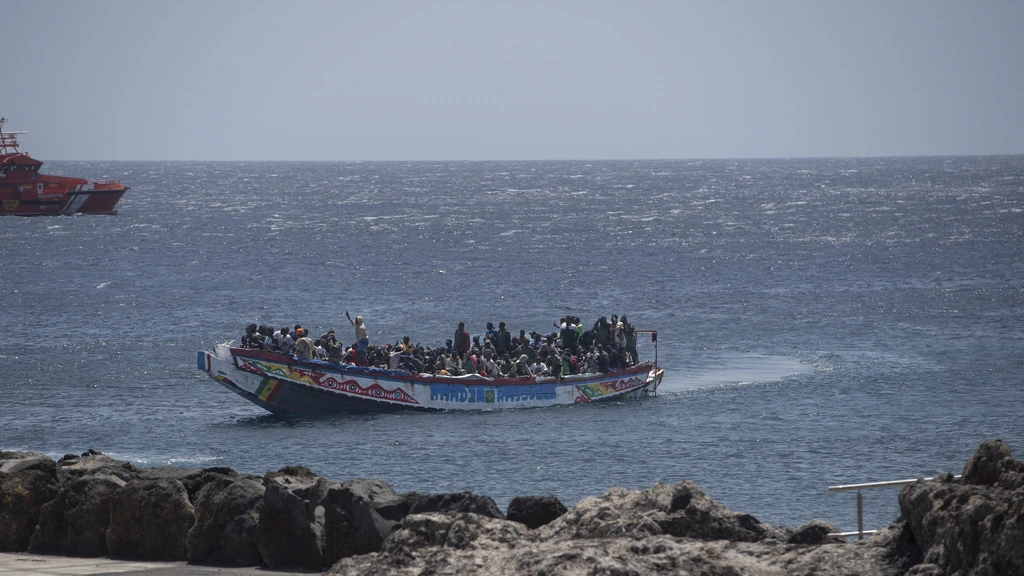
The United Nations has reported that 143 people were found dead on a migrant boat that had been adrift for 25 days off the coast of Mauritania. The vessel was discovered with 38 survivors, according to the UN. Migrants from Sub-Saharan Africa increasingly attempt to reach Europe via the Atlantic Ocean, with the route to the Canary Islands being one of the world's deadliest. The boat departed from Bufaloto, Gambia, and was found last Saturday carrying 143 deceased individuals and 38 survivors. The UNHCR expressed profound sadness and concern, noting that two children among the survivors had lost all their family members during the journey and are now recovering in the hospital. The cause of death, whether starvation or drowning, was not specified. One person remains missing from the boat. In separate operations between July 14 and 18, 387 individuals were rescued off Mauritania's coast. This year, 2,147 migrants have been rescued in 17 operations, yet the UNHCR states that the number of deaths and disappearances remains at an alarming level. Migrants often undertake this perilous journey in fragile wooden fishing canoes, ill-equipped for strong ocean currents. Despite the risks, hundreds of West African migrants attempt this crossing annually. Mauritania and the European Union have a €210 million agreement aimed at deterring migrants from reaching the EU via the African nation. However, human rights organizations accuse Mauritania of mistreating migrants and asylum seekers during coastal checks. These measures appear to be having an impact, as the number of West African migrants traveling to the Canary Islands has decreased for the first time in years.
This incident highlights the extreme dangers inherent in irregular migration routes, particularly the Atlantic passage to Europe. The high death toll underscores the desperation driving individuals from Sub-Saharan Africa, likely fueled by a complex interplay of economic hardship, conflict, and limited legal pathways to seek safety or opportunity. The EU-Mauritania agreement, while potentially reducing transit numbers, raises concerns about the effectiveness of externalized border control and the treatment of migrants within transit countries, as alleged by human rights groups. The tragedy serves as a stark reminder that deterrence policies alone, without addressing root causes and ensuring safe, legal migration channels, may simply shift risks to more perilous routes and outcomes, demanding a comprehensive, rights-based approach to migration governance.
AI-generated to prompt reflection — not editorial opinion, not advice, not a statement of fact. How this works.