18 Words: A Daily Word Puzzle Challenge Requiring Speed and Precision
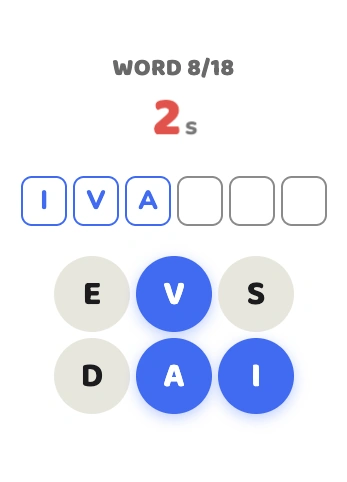
The daily word game '18 Words' presents a challenging task of guessing 18 English words, letter by letter, within a strict 30-second time limit per word. This game, described as an extreme version of 'Cifras y Letras' without the number component, allows only one attempt per day, storing the player's daily score. Players begin with easier four-letter words, progressing to five- and six-letter words, with the difficulty escalating significantly for longer words. The creator of 'zanagramas' developed this game, known for its innovative letter and word-based challenges. An earlier similar game, '23 Words,' is no longer available. Utilizing a keyboard instead of a mouse on a computer can save crucial seconds, potentially determining success or failure. Despite its simple premise, '18 Words' is noted for being engaging and addictive. Players can review previous days' challenges once daily, offering a way to practice and prepare. Related word games include 'Anagramas inversos,' 'Triword,' 'Weaver,' 'Shrinkle,' 'AlfabReto,' and 'IdentiFIVE,' alongside information on 'Wordle' and anagram generation.
The '18 Words' game exemplifies a growing trend in digital entertainment focused on rapid cognitive tasks and daily engagement loops, reminiscent of the success of games like Wordle. Its design leverages time pressure and progressive difficulty to foster a sense of accomplishment and encourage repeat play. The game's addictive nature stems from the dopamine release associated with solving challenges under duress and the inherent human desire for mastery. From a systems perspective, such games tap into fundamental psychological reward mechanisms, creating a compelling user experience that can lead to sustained attention and habit formation. The challenge lies in balancing this engagement with potential downsides, such as excessive screen time or the frustration of failure, which developers must consider for long-term user well-being and platform sustainability.
AI-generated to prompt reflection — not editorial opinion, not advice, not a statement of fact. How this works.