1938 World Cup: Football's Brilliance in France Overshadowed by Looming War
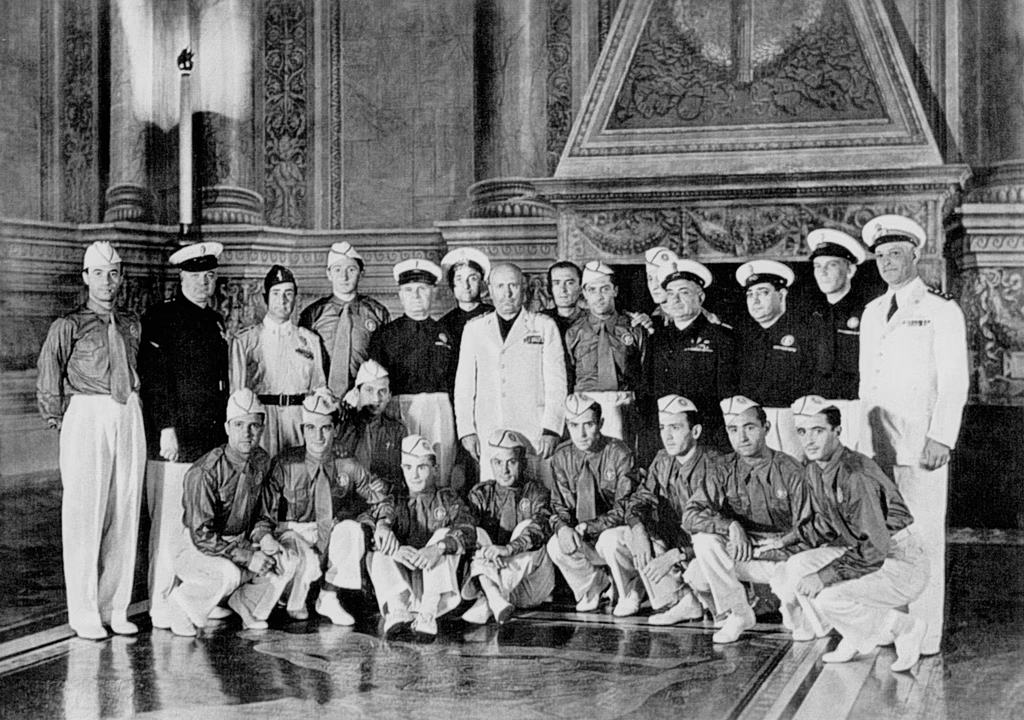
France hosted the 1938 FIFA World Cup, an event marked by political undertones, propaganda, and widespread fear, occurring just before the outbreak of World War II. This tournament is remembered as one of the most unique in history, taking place in a Europe increasingly consumed by political tensions. The atmosphere was charged not only with the excitement of the sport but also with the palpable anxiety of a continent on the brink of conflict. The event served as a stark contrast to the joyous celebrations of football fans, as the specter of war loomed large. It was a moment where sporting spectacle met geopolitical turmoil, highlighting the vulnerability of international events to broader global instability. The 1938 World Cup in France thus stands as a poignant reminder of a world teetering on the edge of a devastating global war.
The 1938 World Cup in France occurred during a period of intense geopolitical instability in Europe, with rising authoritarian regimes and escalating international tensions preceding World War II. The tournament's context highlights how major sporting events can become intertwined with political narratives and propaganda, serving as platforms for nationalistic displays. The proximity to the war underscores the fragility of global peace and the ways in which societal anxieties can permeate even seemingly escapist cultural events. This historical precedent offers a lens through which to examine contemporary international gatherings, considering their susceptibility to political pressures and their role in reflecting or shaping global sentiment, particularly in an era increasingly defined by information warfare and geopolitical competition.
AI-generated to prompt reflection — not editorial opinion, not advice, not a statement of fact. How this works.