1990s vs. Modern Chevrolet Blazer: Safety Test Reveals Decades of Progress
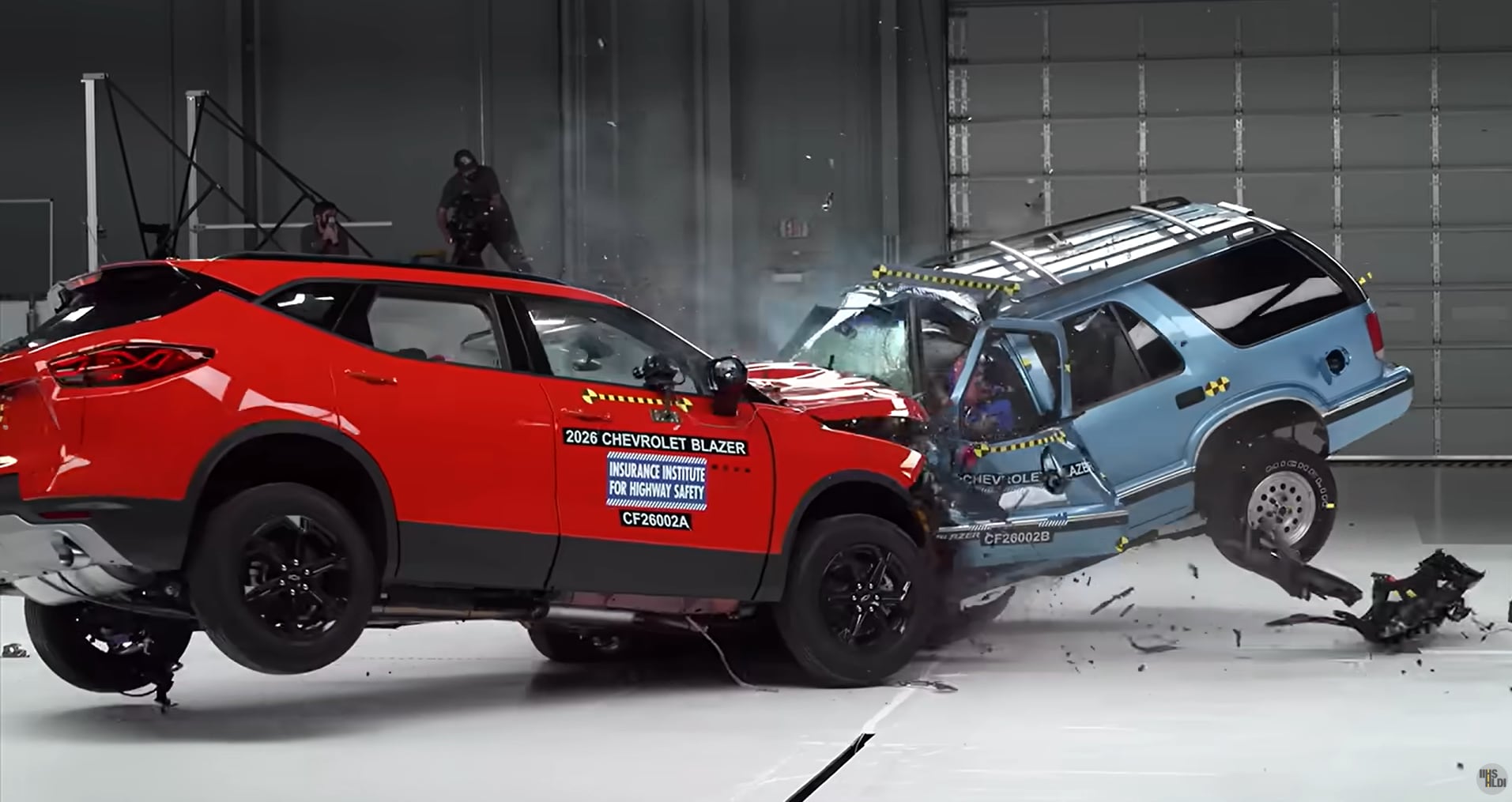
The Insurance Institute for Highway Safety (IIHS) conducted a crash test comparing a 1990s Chevrolet Blazer with a modern version of the same vehicle. The test involved a frontal impact at approximately 64 km/h (40 mph). The results highlighted the significant advancements in passive safety features over the past three decades. The older model demonstrated considerably less protection for occupants compared to its contemporary counterpart. This comparison underscores the evolution of automotive safety standards and technology. The IIHS aims to educate the public about vehicle safety and encourage manufacturers to continue improving their designs. The test specifically focused on how structural integrity and safety systems have changed. The findings serve as a stark illustration of the progress made in protecting drivers and passengers in the event of a collision. The comparison between the two Chevrolet Blazers provides a clear visual and data-driven perspective on automotive safety evolution.
This comparative crash test effectively illustrates the dramatic improvements in automotive safety engineering driven by evolving regulatory standards and consumer demand over thirty years. The divergence in outcomes between the 1990s and modern Chevrolet Blazer models highlights the impact of advancements in materials science, structural design, and restraint systems. Future safety innovations will likely focus on integrating sophisticated sensor arrays and predictive algorithms to mitigate crash severity even further, moving beyond passive protection to active collision avoidance. Understanding these trends is crucial for consumers making purchasing decisions and for policymakers setting future safety benchmarks in an increasingly automated driving landscape.
AI-generated to prompt reflection — not editorial opinion, not advice, not a statement of fact. How this works.