2026 World Cup: A Stage for History, Territories, and Migration
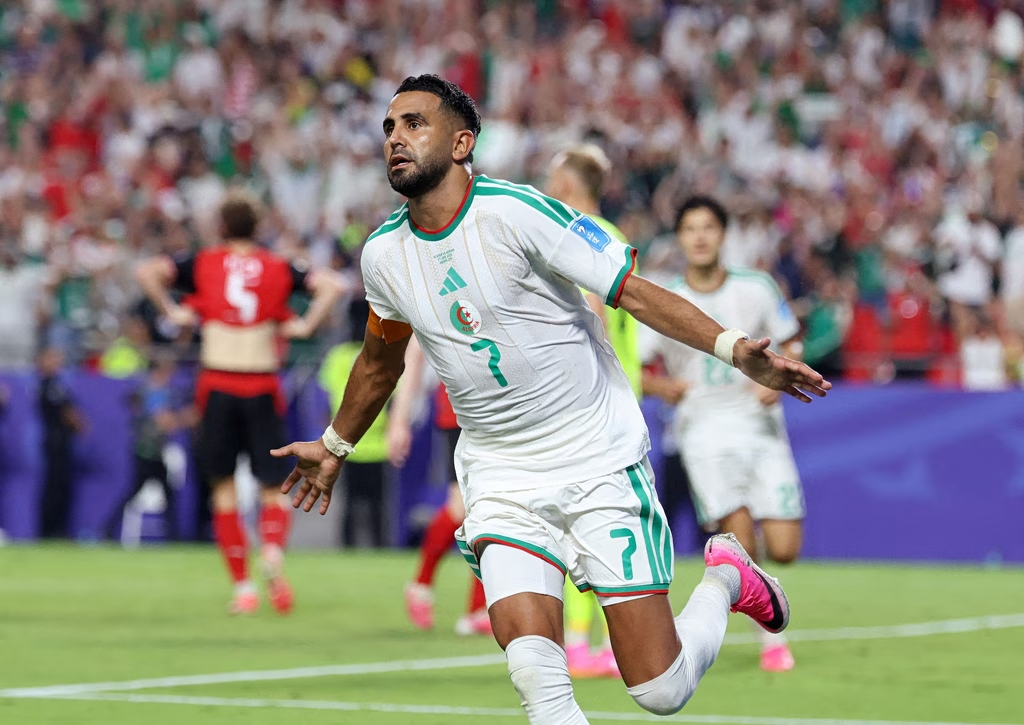
The 2026 World Cup transcends mere football, serving as a platform where historical narratives, overseas territories, and migration converge within the 90-minute matches. The tournament highlights the complex geopolitical and social dimensions embedded in international sports. It offers a unique lens through which to examine the legacy of colonialism and the contemporary realities of global movement. The matches become a microcosm of broader societal issues, reflecting historical power dynamics and modern demographic shifts. This event underscores how sport can be a powerful stage for discussing sensitive and often contentious topics. The intersection of these themes within the World Cup provides a rich context for understanding global interconnectedness. It presents an opportunity to reflect on the past while acknowledging the present realities of diverse populations and their journeys. The tournament's global reach amplifies these discussions, making them accessible to a worldwide audience.
The 2026 World Cup's framing as a stage for historical narratives, overseas territories, and migration suggests a complex interplay between sporting events and geopolitical realities. This perspective invites an examination of how international competitions can reflect and potentially influence perceptions of national identity, historical legacies, and contemporary global challenges like migration. The analysis should focus on the systemic incentives that drive such narratives within global sports governance and media, and how these platforms can be leveraged for dialogue or, conversely, to reinforce existing power structures. Considering the evolving global landscape, particularly with advancements in AI and changing societal demographics, future sporting events may increasingly serve as arenas for these multifaceted discussions, prompting a need for inclusive and representative frameworks.
AI-generated to prompt reflection — not editorial opinion, not advice, not a statement of fact. How this works.