2026 World Cup Sees Record Number of Players Representing Nations Other Than Birthplace
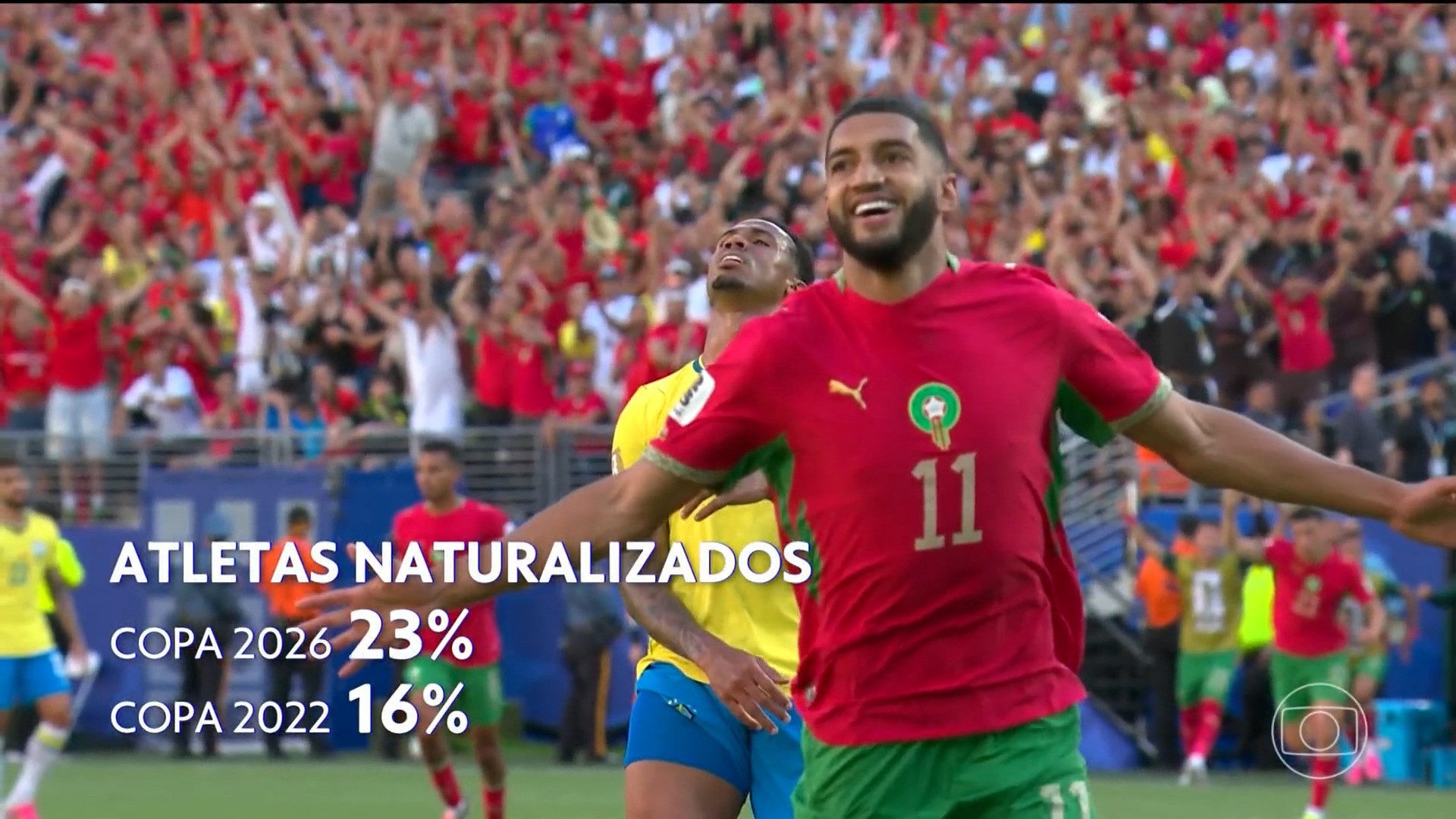
The 2026 FIFA World Cup has set a new record for the number of players representing national teams different from their birth countries. A significant trend is evident, with all eight teams that reached the quarterfinals featuring players born outside the nations they represent. For instance, Erling Haaland, who scored for Norway against Brazil, was born in England, and Michael Olise, a standout for France, was also born abroad. Morocco's captain, Achraf Hakimi, born in Spain, expressed immense pride in representing his Moroccan heritage, acknowledging the support of 44 million Moroccans. This tournament has the highest proportion of players switching nationalities, with 289 out of 1,248 registered players, or 23%, playing for countries other than their birthplace, surpassing the previous record of 16% in 2022. Curaçao contributed the most to this statistic, with only one player born domestically. Cape Verde, considered a surprise team, recruited 14 athletes from the global diaspora. Only eight teams—Brazil, South Africa, Saudi Arabia, Austria, Colombia, Panama, Czech Republic, and Sweden—entered the tournament without players born abroad or naturalized, and none of these advanced to the quarterfinals. FIFA's eligibility criteria for national teams, established around the 1962 World Cup, require players to demonstrate a clear connection through family ties or residency, with no subsequent changes permitted. Notably, six players on the Moroccan squad facing France in the quarterfinals were born in France, highlighting evolving national rivalries in an increasingly globalized tournament.
The 2026 World Cup's record number of players representing nations other than their birthplaces reflects evolving global migration patterns and the increasing interconnectedness facilitated by modern travel and communication. FIFA's eligibility rules, designed to foster national identity, are now navigating a complex reality where "national" teams are composed of individuals with diverse origins. This phenomenon presents a dynamic tension between traditional notions of national representation and the fluid identities of a globalized populace. Future World Cups may need to consider how these eligibility criteria align with contemporary global citizenship and the aspirations of diasporic communities, potentially leading to new frameworks for international sporting representation that acknowledge multifaceted allegiances.
AI-generated to prompt reflection — not editorial opinion, not advice, not a statement of fact. How this works.