22-Year Quest Unlocks Hemoglobin's 3D Structure, Revolutionizing Biology
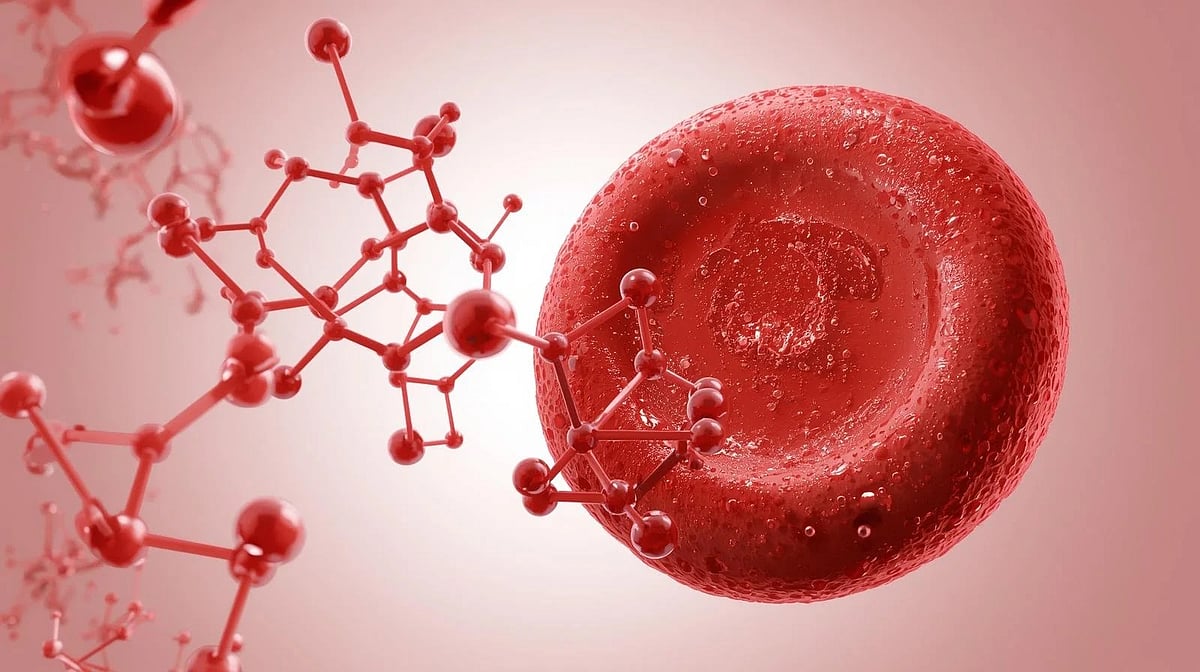
For 22 years, scientist Max Perutz dedicated himself to unraveling the complex three-dimensional structure of hemoglobin, a vital molecule responsible for oxygen transport in the blood. At a time when determining the atomic arrangement of such large proteins was considered nearly impossible, Perutz pursued this challenge with unwavering determination. He employed X-ray crystallography, a technique that involved sending X-rays through protein crystals and analyzing the resulting diffraction patterns. Despite facing significant obstacles, including the lack of crucial phase information needed to reconstruct the 3D structure, Perutz persisted. He eventually devised an ingenious solution by introducing heavy metal atoms into the protein crystals, which subtly altered the diffraction patterns. Analyzing these changes allowed him to deduce the missing phase data. This breakthrough finally revealed the precise atomic structure of hemoglobin, illustrating exactly where oxygen binds and how the molecule changes shape upon oxygen uptake. Perutz's monumental effort, undertaken during a period when DNA research was capturing most attention, provided the first clear understanding of this essential molecule's intricate mechanism. His work fundamentally advanced modern biology by illuminating the previously obscure world of protein structure and function.
Max Perutz's 22-year endeavor to map hemoglobin's structure highlights the profound impact of persistent, fundamental research on scientific progress. While DNA research dominated the mid-20th century, Perutz's focus on protein structure addressed a critical gap in understanding how genetic information translates into biological function. His methodical approach, overcoming significant technical and informational hurdles, demonstrates the power of scientific ingenuity and resilience. This work serves as a testament to the long-term value of deep scientific inquiry, even when immediate applications are not apparent. The detailed understanding of hemoglobin's mechanism, achieved through this painstaking process, has had lasting implications for medicine and our comprehension of life's molecular machinery, underscoring the importance of supporting foundational scientific exploration.
AI-generated to prompt reflection — not editorial opinion, not advice, not a statement of fact. How this works.