245-Million-Year-Old Marine Reptile Fossil Reveals Intact Organs and Last Meal
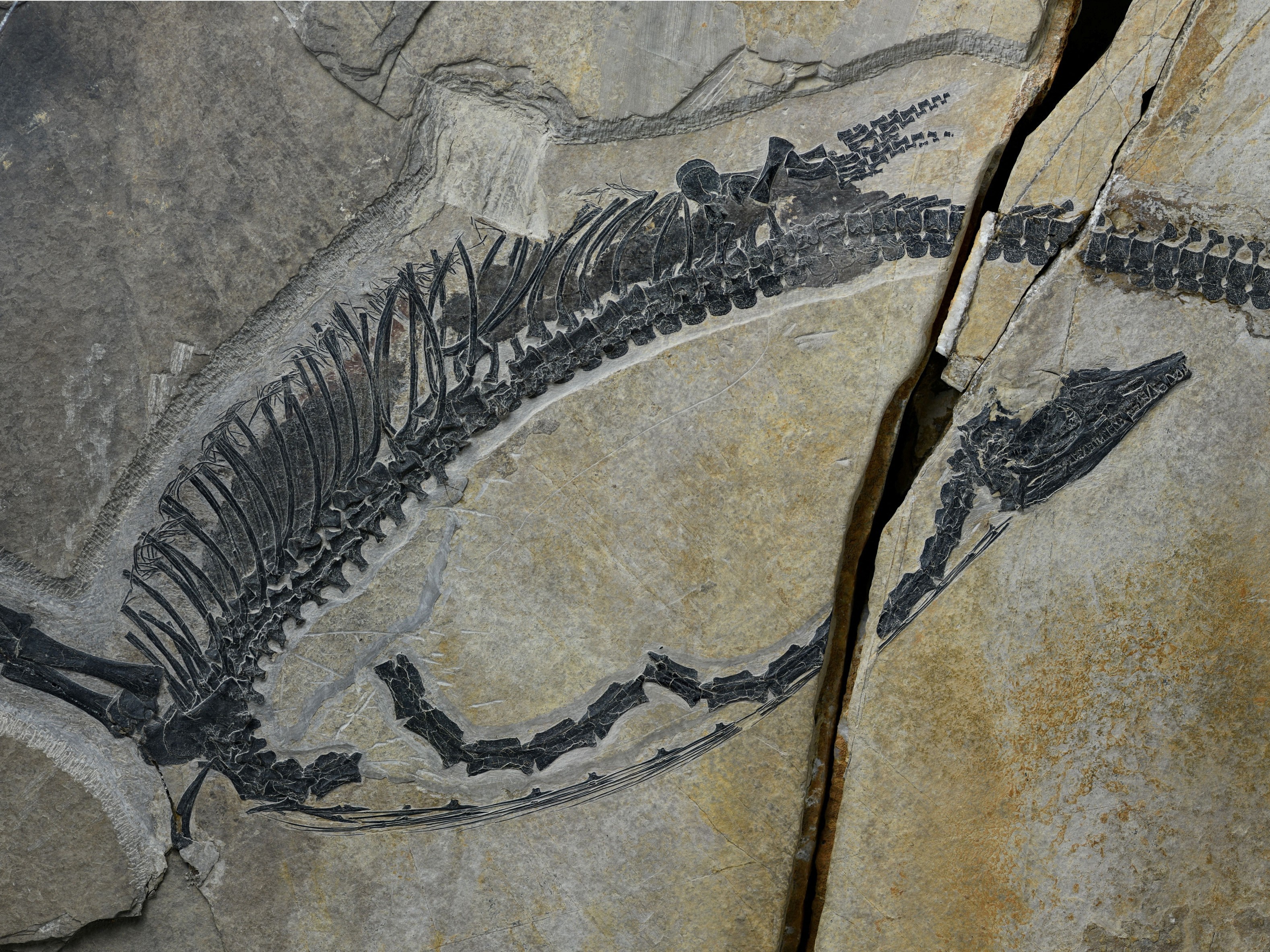
Scientists in China have unearthed an exceptionally well-preserved fossil of a marine reptile, Austronaga minuta, dating back 245 million years to the Triassic Period. Discovered in Yunnan Province, a region known for its rich fossil record from a time of significant evolutionary recovery after Earth's worst mass extinction, this fossil offers an unprecedented look at the internal anatomy of reptiles predating the age of dinosaurs. The Austronaga minuta specimen, measuring approximately 60 cm in length, possessed a small head with a narrow snout filled with fang-like teeth, a long neck and body, and an elongated tail. It also featured large front flippers and smaller hind flippers, suggesting it was an agile swimmer, likely using its tail for propulsion and its long neck for hunting fish. This creature is a descendant of terrestrial reptiles and closely related to archosaurs, a group that includes crocodiles, dinosaurs, pterosaurs, and birds. The Austronaga exhibits a high degree of aquatic adaptation, making it a notable marine reptile within its lineage. The fossil's remarkable preservation extends to its internal organs, including a complete digestive system, which is exceedingly rare for fossils of this age. Researchers identified a single-chambered, sac-like stomach, indicating a simpler digestive structure compared to the dual-chambered stomachs found in later archosaurs like birds and crocodiles. This suggests that the two-chambered stomach evolved later in the archosaur lineage. The fossil also preserved the animal's liver, which retained its reddish color, with evidence of hemoglobin and high iron content still detectable. This finding provides insights into the animal's physiology and the preservation potential of ancient organic matter. The digestive tract, located behind the liver, consisted of a simple, straight tube representing the small and large intestines. This structure is consistent with a carnivorous diet, as meat is generally easier to digest than plants, contrasting with the more complex intestinal tracts seen in later herbivorous archosaurs and dinosaurs.
The discovery of the Austronaga minuta fossil provides a valuable data point for understanding early reptilian evolution and adaptation to marine environments. The exceptional preservation of internal organs, including the digestive tract and evidence of hemoglobin, offers a rare glimpse into the physiology and diet of life forms from the Triassic period. This finding challenges previous assumptions about the timeline of digestive system evolution within the archosaur lineage, suggesting that complex stomach structures developed later than previously thought. Analyzing these ancient biological systems through the lens of modern evolutionary biology and paleontology can illuminate the selective pressures that drove diversification after mass extinction events and the long-term trajectory of vertebrate adaptation. Understanding these ancient evolutionary pathways can offer insights into the resilience and adaptability of life, informing our perspective on current biodiversity challenges and the potential for evolutionary innovation in the face of environmental change.
AI-generated to prompt reflection — not editorial opinion, not advice, not a statement of fact. How this works.