294 Local Assembly Members Submit Petition to MEXT to Abolish "Deterrent Clause"
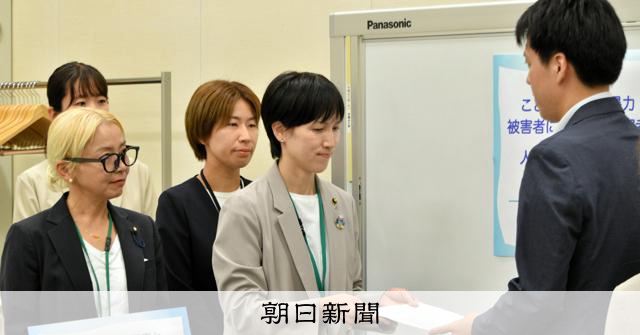
A group of 294 local assembly members from across Japan has submitted a petition to the Ministry of Education, Culture, Sports, Science and Technology (MEXT). The petition calls for the abolition of the "deterrent clause," also known as the "hadorome kiyaku." This clause is reportedly a significant barrier to the smooth operation of local government activities related to education and culture. The assembly members argue that the clause hinders their ability to effectively implement local policies and respond to the specific needs of their communities. They believe its removal would empower local governments to be more agile and responsive in educational and cultural matters. The submission highlights a growing concern among local representatives regarding the centralized control exerted by national ministries over local administrative functions. The petition aims to foster greater autonomy and flexibility for local authorities in shaping educational and cultural landscapes.
The petition by 294 local assembly members to MEXT concerning the "deterrent clause" signals a potential friction point between national administrative oversight and local governance autonomy. This clause, by its nature, likely represents a mechanism for ensuring national policy alignment or quality control, but its perceived restrictiveness suggests it may be creating inefficiencies or stifling local innovation. The assembly members' appeal underscores a broader trend where local entities seek greater flexibility to address region-specific challenges and opportunities, particularly in dynamic fields like education and culture. The long-term implications involve balancing the benefits of centralized standards against the advantages of decentralized decision-making, which can foster tailored solutions and greater public engagement. Examining the specific incentives driving the clause's existence versus the demonstrable costs to local responsiveness will be crucial for future policy adjustments.
AI-generated to prompt reflection — not editorial opinion, not advice, not a statement of fact. How this works.
