2D Polymer Achieves Efficient Water Splitting Through Out-of-Plane Carrier Flow
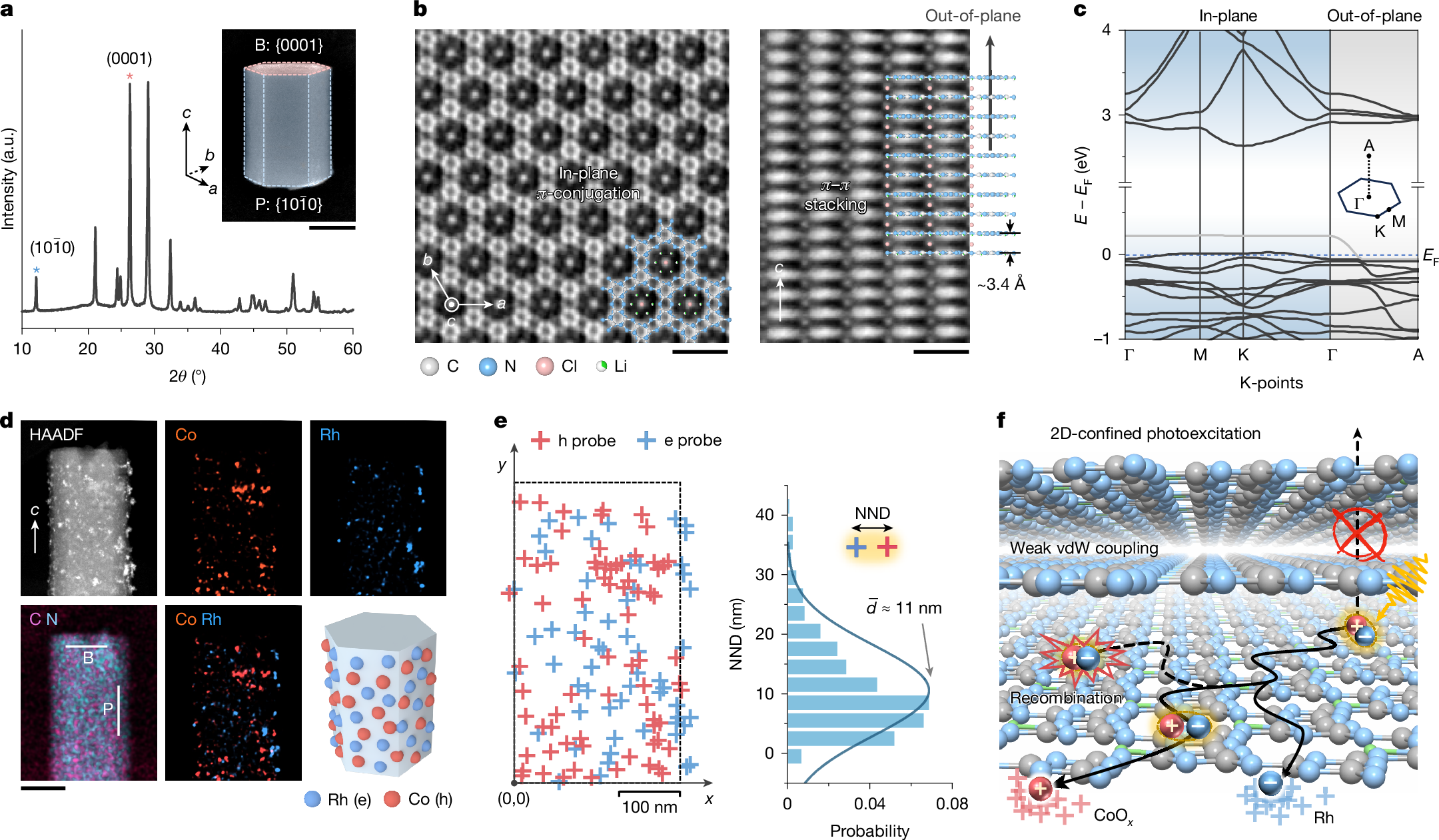
Researchers have developed a novel 2D polymer capable of photocatalytic water splitting, a process that uses light to break down water into hydrogen and oxygen. This breakthrough is attributed to an "out-of-plane" carrier flow mechanism within the polymer structure. This unique arrangement allows for more efficient separation and transport of charge carriers, which are essential for driving the water-splitting reaction. Traditional photocatalysts often struggle with recombination of these charge carriers, limiting their efficiency. The new 2D polymer design appears to overcome this limitation by directing the flow of electrons and holes perpendicular to the polymer plane. This directional flow enhances the probability of these carriers reaching the catalytic sites on the material's surface. The development holds significant promise for the production of clean hydrogen fuel, a key component in future sustainable energy systems. Further research will likely focus on scaling up production of this material and optimizing its performance under various conditions. The potential impact on renewable energy storage and utilization is substantial.
This development in photocatalytic water splitting by a 2D polymer represents a significant advancement in the pursuit of sustainable hydrogen production. The "out-of-plane" carrier flow mechanism addresses a fundamental challenge in photocatalysis: charge carrier recombination. By enabling more efficient separation and transport, the material's design enhances its potential for practical application. This innovation could contribute to the diversification of renewable energy storage solutions, moving beyond intermittent sources like solar and wind. Future research should explore the material's long-term stability, cost-effectiveness of synthesis, and scalability to assess its viability in industrial-scale hydrogen generation, a critical step towards decarbonization.
AI-generated to prompt reflection — not editorial opinion, not advice, not a statement of fact. How this works.