3,000-Year-Old Tomb of Paser Discovered Near Luxor
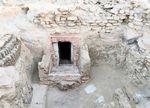
An archaeological research team has uncovered an ancient tomb belonging to a man named Paser in the Theban Necropolis, near Luxor, Egypt. The discovery dates back approximately 3,000 years. The exact role of Paser within the administrative or priestly hierarchy of that era remains undetermined. Further investigation is expected to shed light on his significance and the context of his burial. The Theban Necropolis is a vast ancient burial ground on the east bank of the Nile River, opposite modern Luxor, and has yielded numerous significant discoveries over centuries of exploration. This latest find adds another piece to the complex puzzle of ancient Egyptian society and its funerary practices.
The discovery of Paser's tomb in the Theban Necropolis, dating back 3,000 years, highlights the ongoing potential for uncovering significant historical information from ancient Egypt. While the individual's specific role is yet to be clarified, such finds are crucial for understanding the societal structures, administrative functions, and religious practices of the period. The continued exploration of these sites underscores the importance of archaeological research in piecing together the narratives of past civilizations. Future analysis will likely focus on inscriptions, artifacts, and the tomb's architecture to contextualize Paser's life and contributions within the broader sweep of Egyptian history, potentially revealing new insights into the governance and spiritual landscape of that distant era.
AI-generated to prompt reflection — not editorial opinion, not advice, not a statement of fact. How this works.