3.5 Tons of Drugs Seized in Brazil Hidden in Trucks with False Bottoms and Limestone
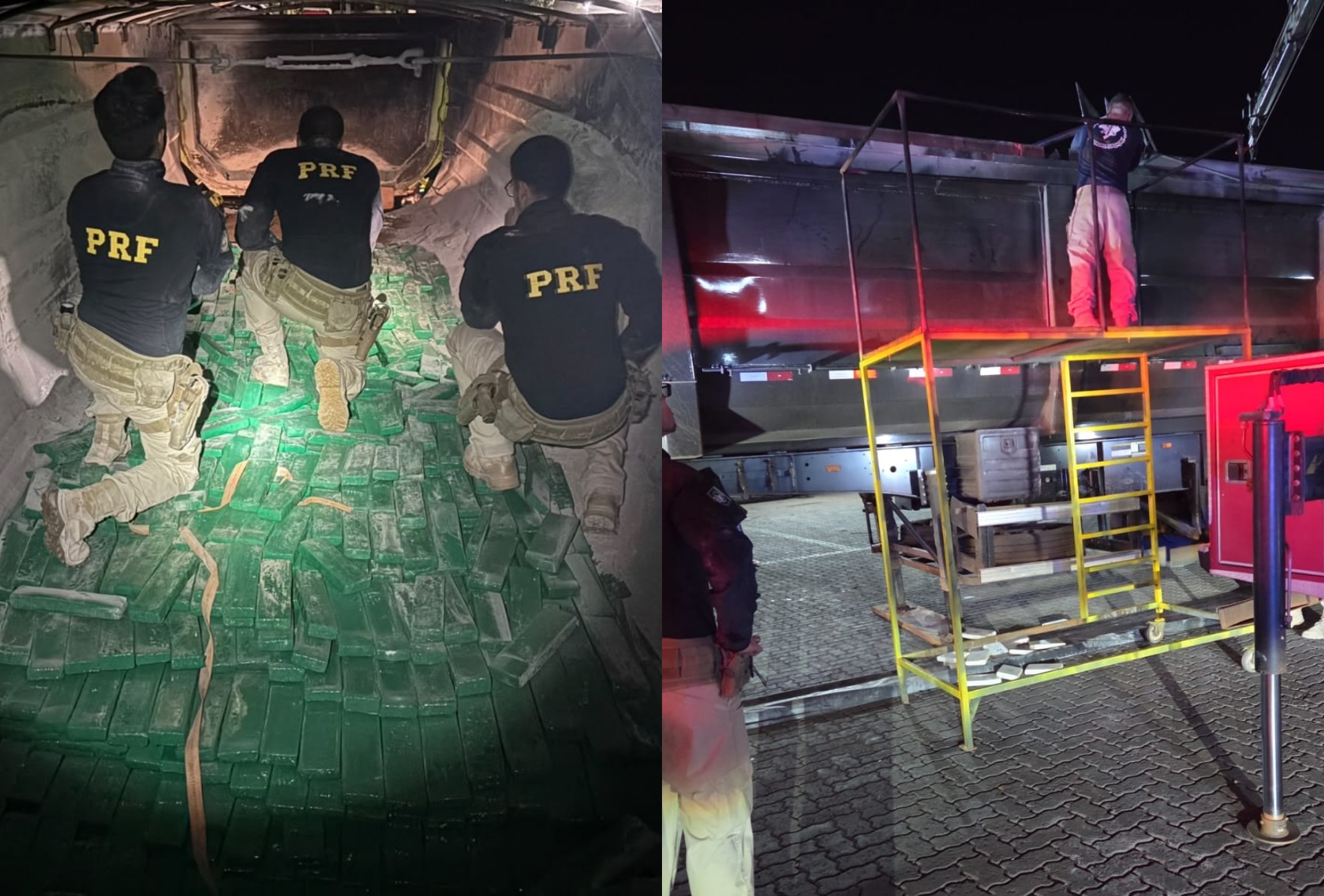
Federal Highway Police in Campo Grande, Brazil, seized 3.5 tons of illicit drugs and contraband medication on Saturday, June 1st. The haul included 2,973.9 kilograms of marijuana and 533.8 kilograms of cocaine, encompassing both base paste and hydrochloride forms. Two truck drivers were apprehended at the scene for drug trafficking and smuggling. The operation occurred on BR-262 at kilometer 351, where officers noticed suspicious behavior from two truck drivers parked at a gas station. The drivers quickly re-entered their vehicles upon spotting the police, and irregularities with the trucks' license plates also raised suspicion. During an inspection, officers discovered illegally imported medications and a receipt from Paraguay in one truck's cabin. Further investigation revealed tampering with the trucks' beds. With assistance from the Fire Department, a hidden compartment containing cocaine was found in one semi-trailer after cutting through a welded structure. The marijuana was concealed beneath a load of limestone in the second truck. Both drivers were arrested and, along with the seized trucks, drugs, and medications, were taken to the Specialized Drug Enforcement Division (Denar) and the Cepol Community Emergency Service Police Station in Campo Grande.
This significant drug seizure highlights the persistent challenges in interdicting cross-border illicit trade, particularly concerning large-volume smuggling operations. The use of sophisticated concealment methods, such as false bottoms and disguised cargo like limestone, indicates a high level of organization among trafficking networks. The involvement of contraband pharmaceuticals alongside narcotics suggests a multi-faceted criminal enterprise exploiting various illegal markets. Future efforts to combat such activities will likely require enhanced technological surveillance, improved inter-agency cooperation, and a deeper understanding of the logistical networks employed by these organizations, potentially leveraging AI for predictive analysis of smuggling routes and methods.
AI-generated to prompt reflection — not editorial opinion, not advice, not a statement of fact. How this works.