3D-Printed Scuba Suit Enables Cyborg Cockroaches to Survive Underwater
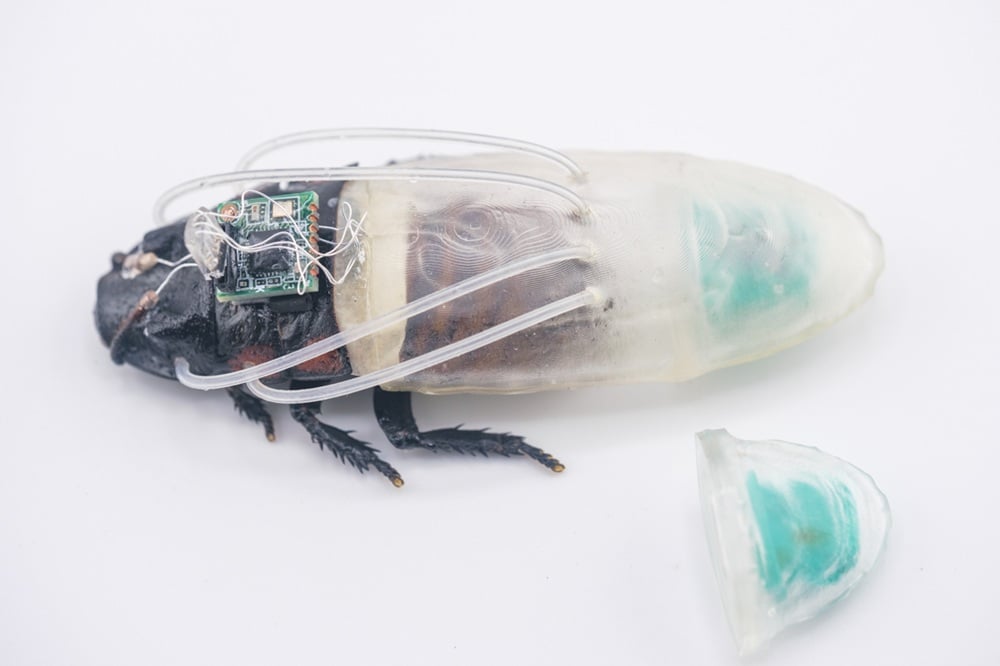
Researchers have developed a novel 3D-printed diving suit designed for cockroaches, enabling them to survive submerged in water for extended periods. This innovative suit was successfully tested on cockroaches that had electrodes implanted in them. The cyborg cockroaches, equipped with these specialized suits, were able to remain underwater for as long as three hours. This breakthrough opens new avenues for exploring the potential of bio-integrated robotic systems and studying the physiological responses of insects in challenging environments. The development signifies a step forward in the field of bio-robotics, merging biological organisms with electronic components to create hybrid systems with enhanced capabilities. Further research may explore applications ranging from environmental monitoring to advanced sensing technologies.
This development in bio-robotics, where an external suit enhances an organism's survival capabilities, presents an interesting case study in human-animal-machine interfaces. The ability to extend an insect's operational time underwater through a 3D-printed suit and implanted electrodes raises questions about the ethical boundaries of bio-integration and the potential for unintended consequences in future applications. As AI and robotics advance, the incentive structures driving such research may focus on creating more resilient and adaptable systems, but it is crucial to consider the long-term implications for both the organisms involved and the broader ecological systems. This technology could offer unique perspectives on environmental sensing, but careful consideration of governance and oversight will be necessary to ensure responsible innovation.
AI-generated to prompt reflection — not editorial opinion, not advice, not a statement of fact. How this works.