40-Year Conflict May Influence World Cup Final Referee Selection
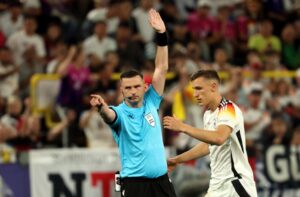
Political and historical factors could significantly impact the choice of the referee for the World Cup final. Despite being considered one of the world's top referees, English official Michael Oliver might not be assigned to officiate the final match. This decision is reportedly not based on his on-field performance but rather on stringent regulations. The article suggests that a conflict spanning over four decades may play a decisive role in determining who will take charge of the championship game. The specific nature of this conflict and its direct link to Oliver's potential appointment remain central to the discussion, implying that geopolitical considerations could outweigh purely technical merit in this high-stakes decision.
The selection of officials for major international sporting events often involves complex considerations beyond pure performance metrics. Geopolitical sensitivities and historical relationships between nations can create intricate dynamics that influence decision-making processes, even in realms typically governed by objective criteria. This situation highlights the challenge of insulating sporting bodies from broader international relations, suggesting that governance structures may need to evolve to ensure impartiality and transparency. As global interconnectedness increases, the potential for external factors to influence institutional choices will likely persist, prompting a need for robust frameworks that safeguard the integrity of such events against undue political pressure.
AI-generated to prompt reflection — not editorial opinion, not advice, not a statement of fact. How this works.