551 Bihar Schools Painted Saffron, Sparking Opposition and JDU Concern
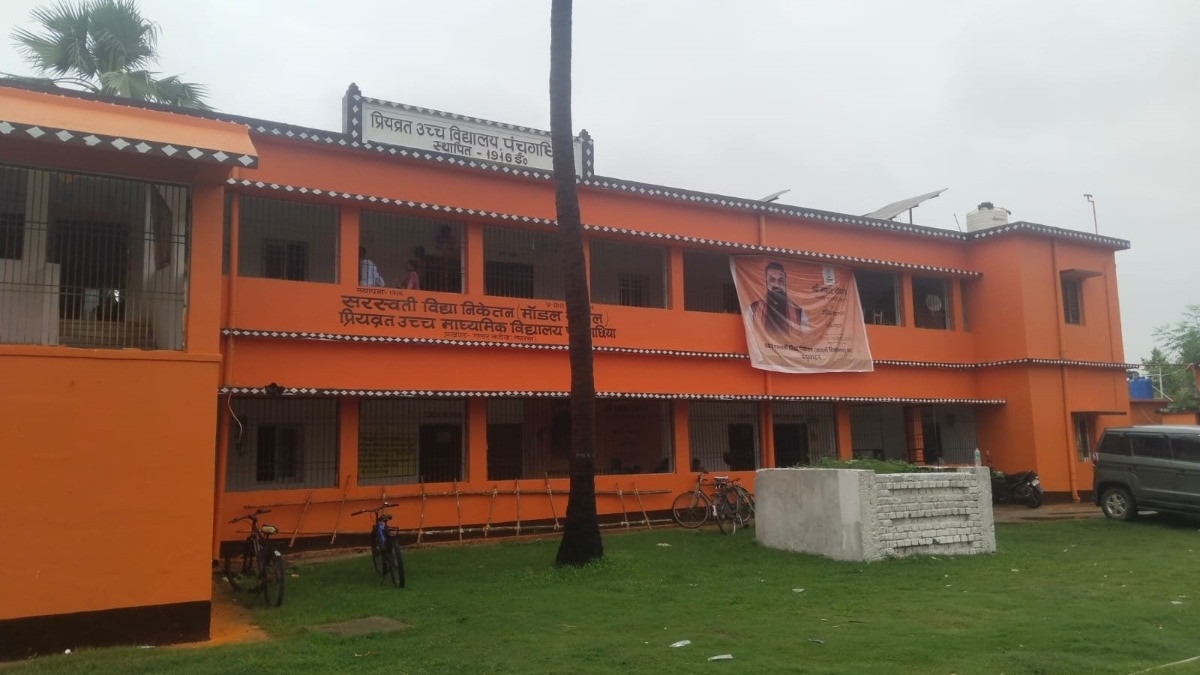
Following a directive from the NDA government led by Samrat Chaudhary in Bihar, 551 model schools are being painted saffron. Furthermore, the names of these schools have also been changed. This move has drawn criticism from opposition parties Congress and RJD, while the Janata Dal (United) or JDU has also expressed concern over the developments. The saffron color is often associated with Hindu religious symbolism in India. The renaming and repainting of schools have become a point of contention, raising questions about the secular nature of public institutions and the potential for political or religious influence in education. The JDU's expression of concern suggests internal dissent or unease within the ruling coalition regarding this particular policy. The opposition parties are framing the action as an attempt to saffronize education, a term often used to describe the imposition of Hindu nationalist ideology on public institutions. The specific number of schools affected, 551, indicates a significant scale for this initiative.
The decision to repaint 551 model schools in Bihar with saffron and alter their names, under the leadership of NDA's Samrat Chaudhary, presents a complex interplay of governance and public perception. While the government may frame this as an aesthetic or branding initiative, the strong reactions from opposition parties like Congress and RJD, and even from within the ruling coalition by JDU, highlight potential concerns regarding the secular principles of public education and the symbolic implications of religious color association. Such actions can be interpreted as attempts to align public institutions with specific cultural or religious identities, which may alienate segments of the population and invite scrutiny over the separation of state and religion. The long-term impact could involve debates on inclusivity, the politicization of education, and the potential for such initiatives to foster division rather than unity in a diverse society. Future governance models may need to navigate these sensitivities more carefully to ensure public trust and equitable representation.
AI-generated to prompt reflection — not editorial opinion, not advice, not a statement of fact. How this works.