69-Year-Old Bride Fulfills Lifelong Dream of Wedding Dress at Family Ceremony
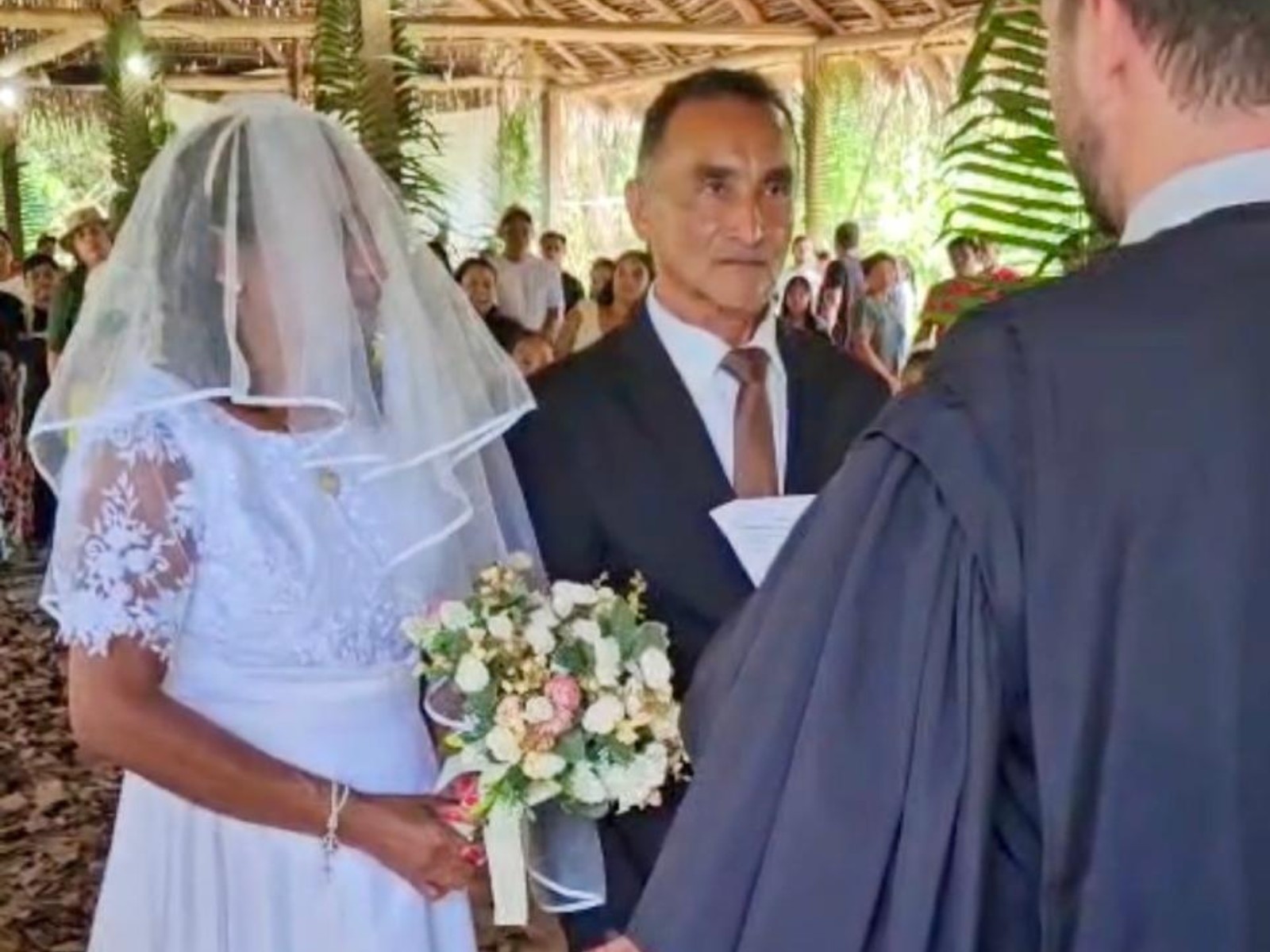
Maria Dacisete Mendes de Araújo, a 69-year-old retiree, recently fulfilled her lifelong dream of wearing a wedding dress during a special ceremony in Tarauacá, Acre. She officially married her husband of nearly 50 years, Sebastião da Silva, 73, on October 10th. The ceremony was particularly unique as their three sons, Nelson Lima de Araújo, Antônio Ronaldo Araújo Silva, and Adnaldo Araújo Silva, also tied the knot on the same day. Dacisete, adorned in a long white gown, veil, and bouquet, entered the ceremony hand-in-hand with Sebastião, deeply moving those present. She expressed immense joy, stating she had always dreamed of wearing a wedding dress and was reluctant to take it off afterward. The wedding attire, groom's suit, and cake were generously donated by a long-time friend and councilwoman, Veinha do Valmar. Dacisete and Sebastião, who have been together for almost five decades, have five children, 14 grandchildren, and six great-grandchildren, making their family a significant gathering of over 25 people. Dacisete shared that the memory of her wedding day will be cherished by future generations, and she feels immense happiness and peace knowing she realized this cherished dream. A minor hiccup occurred when the wedding dress, made in a neighboring town, arrived the day before the ceremony and was found to be too tight, requiring last-minute alterations by a local seamstress. The collective wedding event was organized by the 'Projeto Cidadão' (Citizen Project) of the Court of Justice of Acre (TJ-AC), which facilitated 16 other unions, including those of indigenous couples from the Yawanawa and Noke Koi tribes, alongside local riverine residents. The ceremony was presided over by substitute judge Ricardo Cavalli.
This event highlights the enduring human desire for personal milestones and recognition, even within collective or community-focused ceremonies. The convergence of multiple family weddings and broader community unions, facilitated by a judicial project, presents a system designed to streamline legal processes and foster social cohesion. The narrative of the bride's personal dream interwoven with these larger objectives offers a perspective on how individual aspirations can be realized within structured societal events. Looking ahead, such initiatives could evolve to integrate more personalized cultural expressions, balancing administrative efficiency with the deep-seated need for individual celebratory moments in an increasingly digitized world.
AI-generated to prompt reflection — not editorial opinion, not advice, not a statement of fact. How this works.