7-11 Sues Nike Over Sneaker Colorway, A-Shares Trade Rules Change, Apple's Memory Strategy
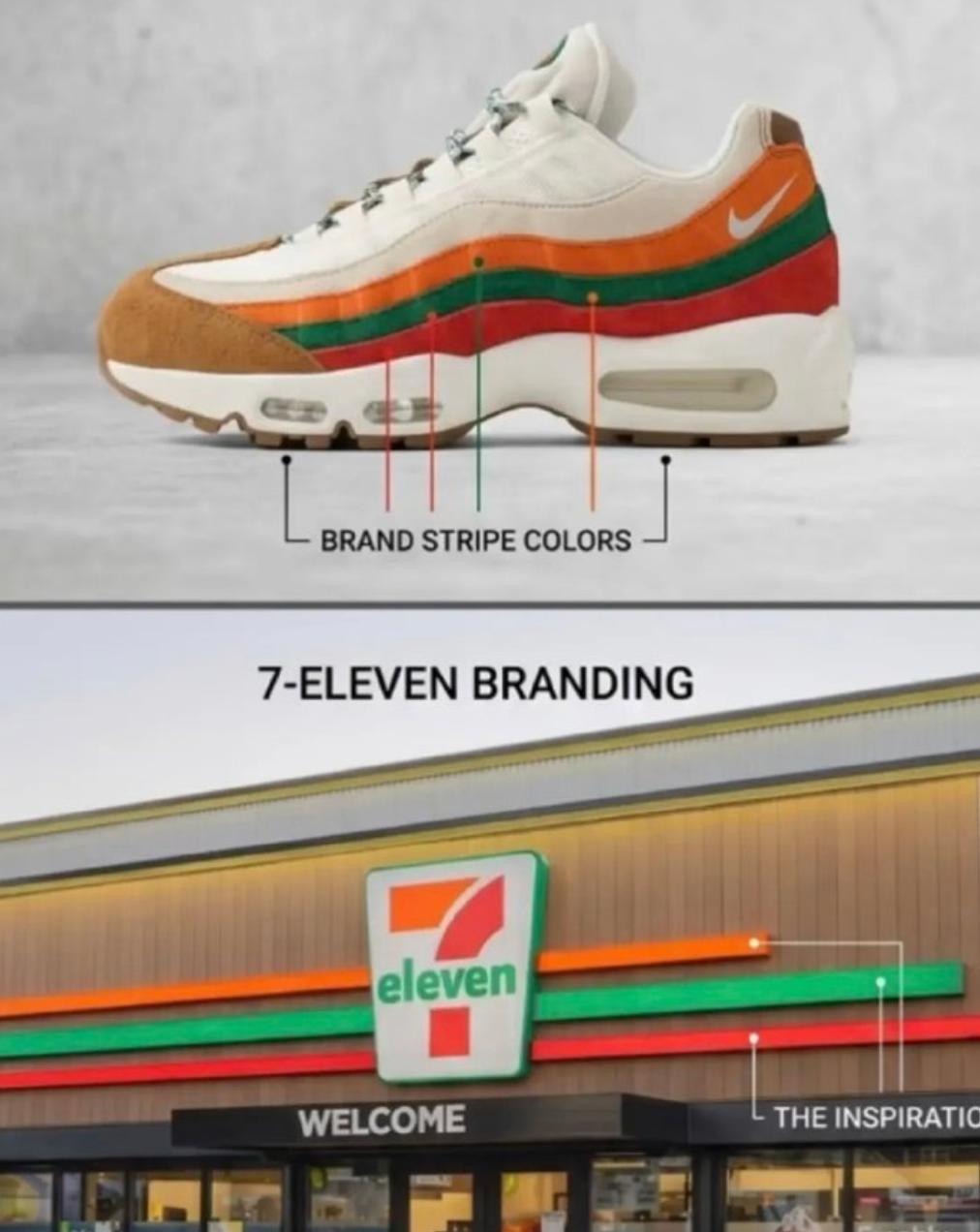
Convenience store giant 7-Eleven has filed a lawsuit against Nike in a Texas federal court, alleging that the sportswear brand's new Air Max 95 sneakers, set to launch on July 11th, copy 7-Eleven's iconic orange, green, and red color scheme. 7-Eleven claims the color combination is confusingly similar to its brand trademarks and that Nike deliberately chose the July 11th release date, coinciding with 7-Eleven's annual promotion.
In China, new A-share trading rules took effect on July 6th, introducing five key changes. These include expanding fixed-price after-hours trading to all A-shares and ETFs, shifting the Shanghai Stock Exchange's closing auction to a call auction, increasing the price fluctuation limit for risk-warning stocks from 5% to 10%, introducing a market maker system on the Shenzhen Stock Exchange's ChiNext board, and optimizing block trading mechanisms. Meanwhile, Wall Street analysts suggest Apple's reported procurement of memory from China's CXMT is a negotiation tactic to pressure existing suppliers like Samsung, SK Hynix, and Micron into lower prices for future contracts. They cite US policy restrictions, technical gaps, and patent risks as reasons why substantial procurement from CXMT is unlikely.
In technology news, Apple's AI-powered Siri will launch this fall, exclusively for iPhone 15 Pro and newer models, along with specific iPad and Mac devices. Separately, Micron Technology is investing $9.3 billion to expand its Japanese factory for advanced memory chips, including HBM, with production expected by late 2028. In other AI developments, Anthropic plans to establish 1.4GW of data center capacity in Australia, a project estimated at $15 billion. Tesla is also reportedly limiting employee spending on AI tools to $200 per week, with exceptions for its own Grok model. The Chinese AI chatbot platform 'Qianwen' will cease operations on July 15th.
The legal dispute between 7-Eleven and Nike highlights the increasing value and distinctiveness of brand identity in consumer markets, particularly concerning color palettes and launch timing, which can be perceived as intellectual property. The A-share trading rule changes signal China's ongoing efforts to modernize its capital markets and enhance liquidity, potentially attracting more domestic and international investment by improving trading efficiency and risk management. Apple's strategic sourcing of memory chips, if indeed a negotiation tactic, demonstrates the complex geopolitical and competitive dynamics influencing global supply chains, where market access and pricing leverage are critical. The rapid expansion of AI infrastructure by companies like Anthropic, contrasted with Tesla's cost controls, reflects a bifurcating investment landscape within the AI sector, driven by both immense growth potential and the need for operational efficiency and responsible resource allocation.
AI-generated to prompt reflection — not editorial opinion, not advice, not a statement of fact. How this works.