730 Climate Refugee Families Transition from Shanties to Apartments in Cox's Bazar
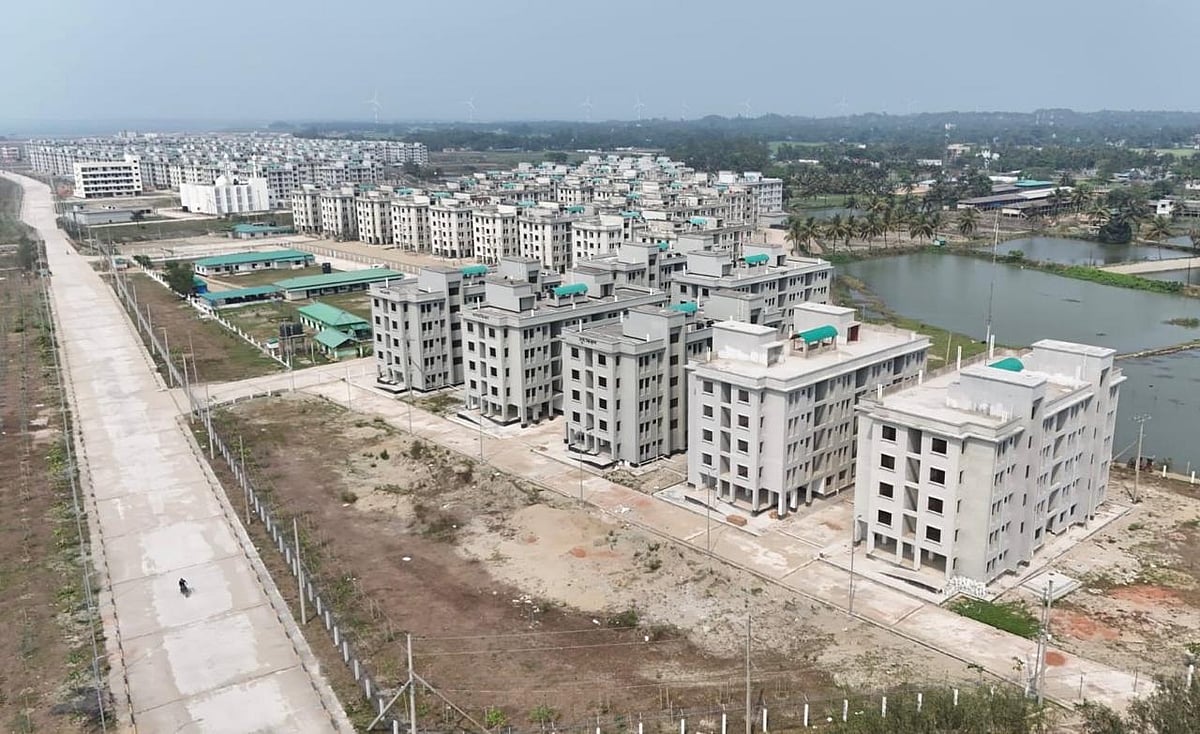
In Cox's Bazar, Bangladesh, 730 climate refugee families have been allocated apartments in a special housing project, marking a significant improvement from their previous makeshift dwellings. Parveen Akhtar, 50, who has been living in a shanty on government land since her home in Kutubdia was destroyed by a cyclone in 1991, expressed her emotional gratitude upon receiving a flat. She described the hardships of living in a polythene shack, enduring rain and insect infestations, and could barely imagine moving into a five-story building. Rezaul Karim, a fisherman whose home was also lost to the sea, shared similar sentiments of disbelief and joy at the prospect of owning an apartment.
The lottery for flat allocation was held on Sunday at the Khurushkul special shelter project, designed for climate refugees. Over 2,000 climate refugees participated, with most beneficiaries belonging to extremely poor and laboring families. The district administration managed the transparent lottery process, offering permanent housing solutions to hundreds of displaced families. This initiative is part of a larger project to resettle over 4,000 families displaced by the expansion of Cox's Bazar Airport's runway. The project, implemented by the Bangladesh Army's 34th Engineer Construction Brigade at a cost of 1,457 crore Taka, includes 128 five-story buildings, community facilities, and infrastructure for economic activities like fish drying.
Project Director Lieutenant Colonel Mirajul Islam stated that the goal is to provide well-planned, eco-friendly housing and restore dignity to climate refugee families. The project, which began in December 2020, is expected to be completed by December of this year, offering permanent housing for 4,128 families. District Administrator Md. A. Mannan emphasized the transparent and fair selection process to ensure genuine victims receive their due. Law enforcement agencies are also committed to ensuring security within the project area.
This initiative represents a critical state intervention addressing the displacement caused by climate change, a growing global challenge. By providing permanent housing, the project aims to offer stability and dignity to vulnerable populations. The scale of the resettlement, involving over 4,000 families and significant infrastructure development, highlights the government's commitment to managing climate-induced migration. However, the long-term success will depend on the sustainability of the housing, the integration of residents into local economies, and the ongoing management of environmental risks. Future considerations should include strategies for economic self-sufficiency for these families and adaptive measures against the persistent threats of climate change, ensuring this housing is not merely a temporary solution but a foundation for resilient livelihoods.
AI-generated to prompt reflection — not editorial opinion, not advice, not a statement of fact. How this works.
