80-Million-Year-Old Turtle Fossils Unearthed at Pirapozinho Paleontological Site
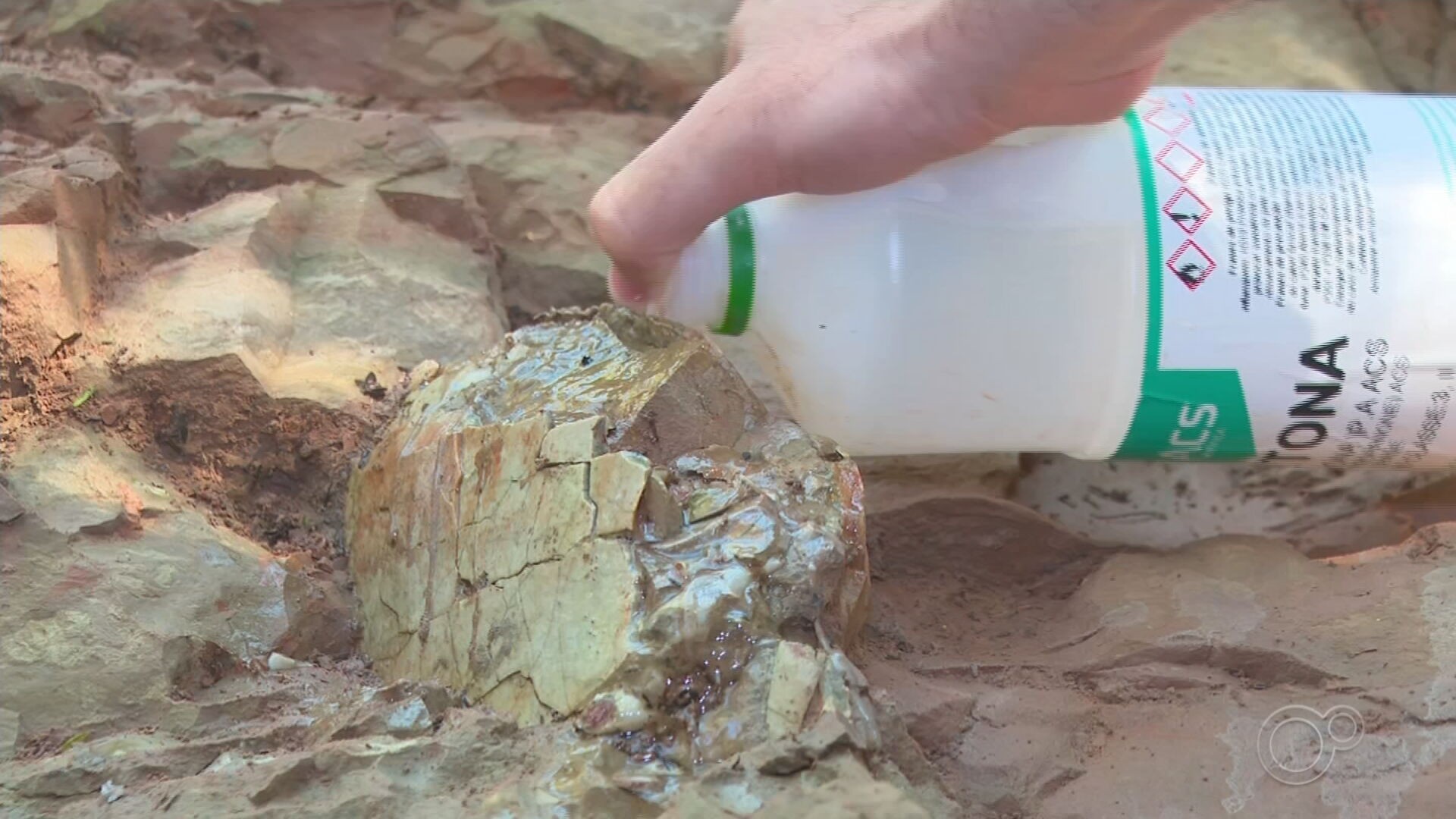
An expedition of paleontologists and students from various Brazilian universities, including UERJ, UFRJ, and UFES, has discovered fossilized turtle remains dating back over 80 million years in Pirapozinho, São Paulo. The site, nicknamed "Tartaruguito" due to the abundance of turtle fossils found there, yielded specimens of species like Bauruemys elegans and Roxochelys wanderleyi. Notably, the area also contains rare evidence of the Pelomedusoides group of turtles. Joaquin Pedro Bogado Diniz, a doctoral researcher from the National Museum, explained that ancient animals were buried by mud and floodwaters during alternating wet and dry seasons, creating distinct fossil layers. The discovery site, located on an abandoned railway line, is considered a significant location for studying fossils from the Cretaceous period. Researchers collaborate with specialists to analyze findings, contributing to a broader understanding of the region's paleontology. The expedition, funded by the National Institute of Paleontology (Paleovert) and the Espírito Santo State Research Support Foundation, also previously found fossils of the ancient crocodile Pepesuchus in the area. The process of excavation requires immense patience and a trained eye, with researchers carefully removing earth and rock layers. Students involved expressed excitement about directly engaging with prehistoric life and contributing to scientific knowledge dissemination. Paleontologist Rodrigo Giesta Figueiredo emphasized that studying these ancient environmental changes provides crucial insights for understanding present-day ecosystems and projecting future environmental shifts.
The discovery of 80-million-year-old turtle fossils in Pirapozinho highlights the value of dedicated paleontological research in uncovering Earth's deep history. Such findings offer invaluable data for reconstructing past ecosystems and understanding long-term environmental dynamics, which is increasingly critical in an era of rapid climate change. The collaborative efforts between multiple universities and research institutions, supported by public funding, demonstrate an effective model for scientific advancement. This systematic approach to fossil discovery and analysis, as exemplified by the "Tartaruguito" site, provides a robust foundation for interpreting evolutionary processes and informing future environmental stewardship. By examining how ancient environments responded to natural fluctuations, scientists can gain perspective on current ecological challenges and potential future trajectories.
AI-generated to prompt reflection — not editorial opinion, not advice, not a statement of fact. How this works.
