82-Year-Old Sweet Maker Sells Rasgullas Piece by Piece in Bangladesh
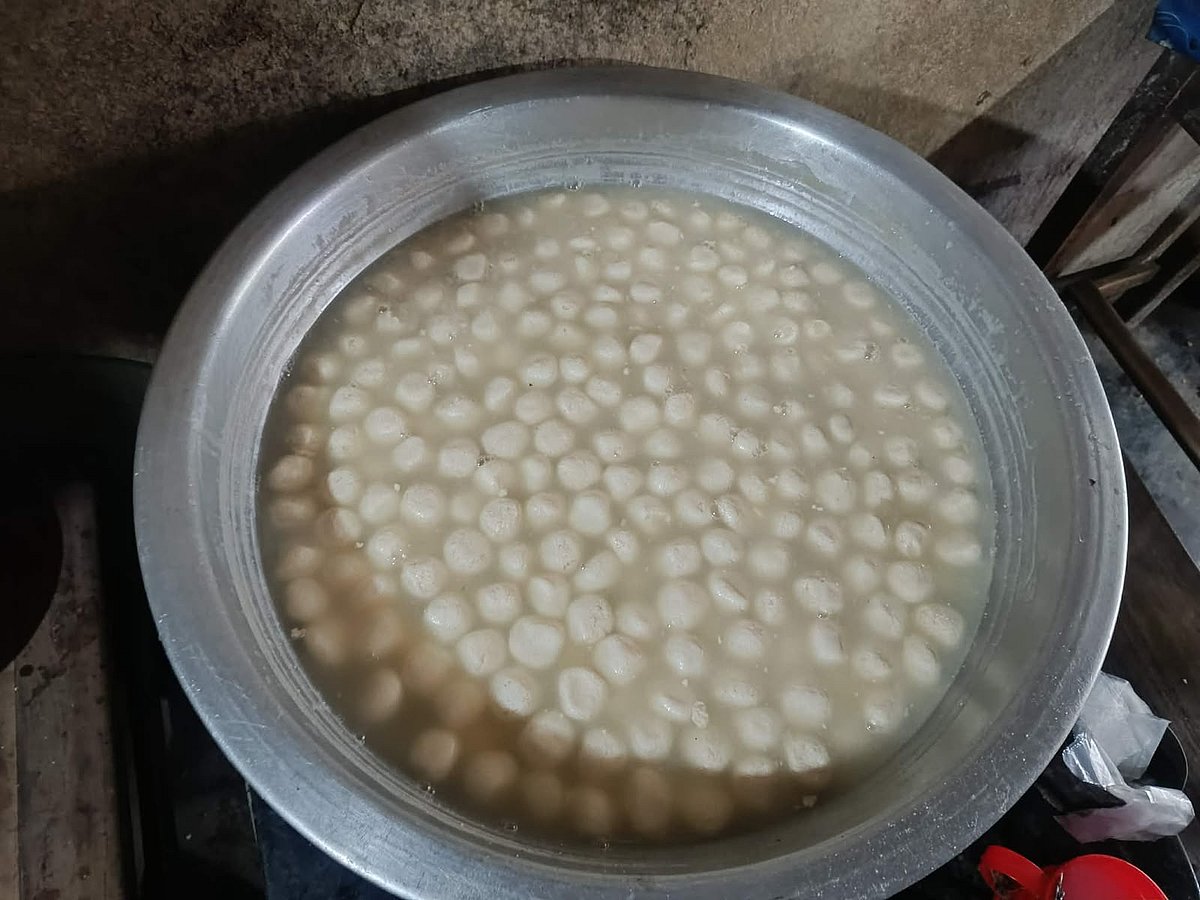
Usha Ranjan Pal, an 82-year-old confectioner in Harbang market, Chakaria, Bangladesh, has been making traditional rasgullas for five decades. His shop, 'Pal Mishti Bhandar,' uniquely sells these sweets by the piece, not by weight. Pal adheres to traditional methods, preparing his rasgullas on a wood-fired stove to preserve their authentic taste. The shop, located a kilometer west of the Harbang bus station on the Chittagong-Cox's Bazar highway, is a well-known establishment in the area.
Pal's rasgullas are priced at 12 taka each and are sold alongside crispy nimki. Despite the piece-based pricing, customers form queues to purchase them, with limited availability for those who arrive late. Pal, despite his age and white hair, personally oversees the preparation, meticulously checking the milk's consistency, the curdling process, and the syrup's boiling point. The sweets are made with simple ingredients: milk curd, sugar, cardamom, and a small amount of flour, with only 20 grams of flour mixed with one kilogram of curd to maintain quality.
Pal began his journey at 14, working at 'Dutta Mishti Bhandar' after losing his father and facing family hardship. He learned the craft hands-on, mastering every step from boiling milk to shaping the sweets. In 1972, he purchased the shop and renamed it 'Pal Mishti Bhandar,' striving to maintain the original taste despite changing times and prices. His rasgullas are a popular choice for gifts and are sought after by people from surrounding areas like Chakaria, Peguya, Lohagara, and Satkania. While Pal's three children are established in their careers, he remains dedicated to his shop, which he considers his primary identity and a source of lifelong passion rather than just a livelihood.
The story of Usha Ranjan Pal's 'Pal Mishti Bhandar' highlights the enduring appeal of traditional craftsmanship and quality in a rapidly modernizing food industry. Pal's commitment to time-tested methods, such as using a wood-fired stove and simple ingredients, contrasts with mass-production techniques that often prioritize efficiency and cost reduction over taste and texture. This dedication has cultivated a loyal customer base and a unique market position, demonstrating that niche artisanal products can thrive by offering authenticity. The narrative also touches upon the generational shift in business ownership and the personal fulfillment derived from a lifelong vocation, suggesting that legacy and passion can be as significant as financial returns. In the context of evolving consumer preferences towards natural and handcrafted goods, Pal's business model offers a compelling case study for preserving culinary heritage while meeting contemporary demand.
AI-generated to prompt reflection — not editorial opinion, not advice, not a statement of fact. How this works.