96 Fines Issued for Trucks Illegally Crossing Merwedebrug in Five Days
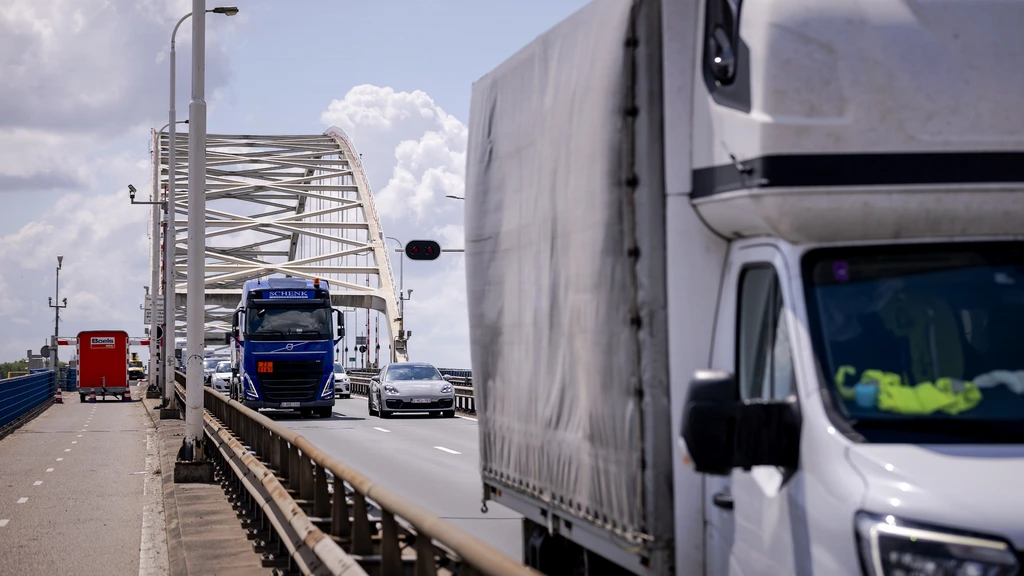
In a five-day period, 96 fines were issued to drivers of trucks and tour buses for violating a prohibition on crossing the Merwedebrug. The bridge, located on the A27 near Gorinchem, has been closed to heavy traffic since July 18th due to structural weaknesses in its steel arch. The fine for violating this ban is 500 euros. Authorities began enforcing the ban with cameras on Saturday, identifying offenders by their license plates. Initially, only vehicles with Dutch license plates were fined, as the violation does not fall under current European agreements for data exchange. However, starting September 1st, separate agreements will allow for the enforcement of this ban on trucks with Belgian, German, and Swiss license plates. Foreign drivers stopped by police or enforcement officers can still be fined. The Merwedebrug is a crucial link between North Brabant and the Randstad, and its weakened steel construction was discovered during an inspection. While heavy vehicles are banned, passenger cars, motorcycles, delivery vans, scheduled buses, and emergency services are still permitted to use the bridge. Heavy traffic is being rerouted via the A16 and A2, with hazardous material transport directed via the A2.
The enforcement of the Merwedebrug traffic ban highlights the challenges of managing critical infrastructure under stress. The significant number of violations, even with a clear prohibition and substantial fines, suggests a potential disconnect between regulatory enforcement and logistical realities for transport companies. The initial focus on Dutch license plates points to complexities in cross-border regulatory harmonization, even within regions with established cooperation frameworks. As new agreements are implemented, the focus will shift to ensuring consistent application and compliance across all nationalities. This situation underscores the need for robust communication strategies and potentially alternative routing solutions that minimize economic impact on the transport sector while prioritizing public safety and infrastructure integrity.
AI-generated to prompt reflection — not editorial opinion, not advice, not a statement of fact. How this works.