96-Year-Old Fan Decorates Streets for Every Brazilian World Cup Win Since 1958
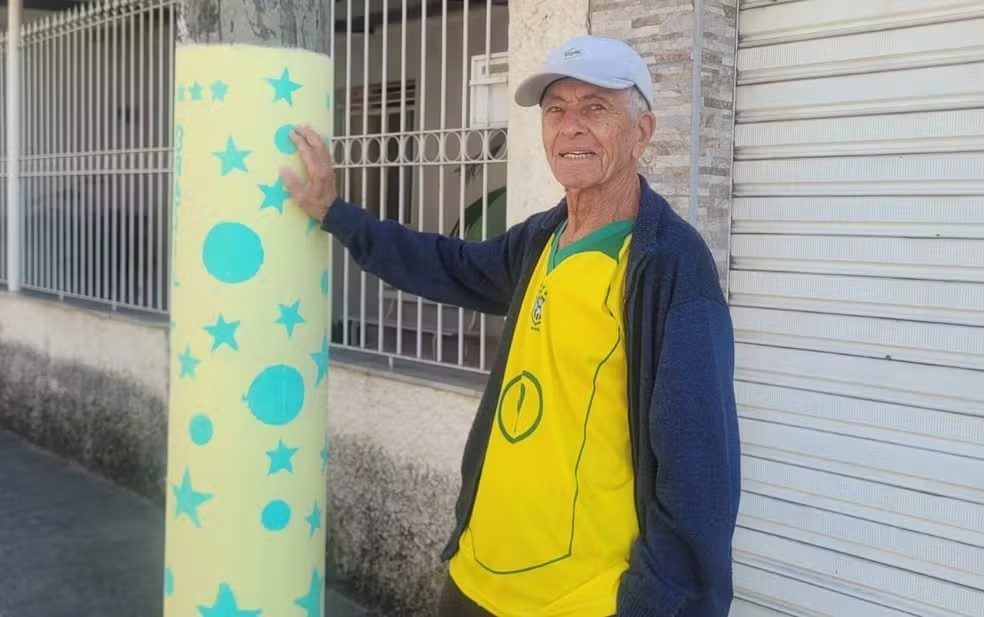
Leônio Soares Galvão, a 96-year-old resident of Juiz de Fora, Brazil, has maintained a unique tradition of decorating his neighborhood streets for every FIFA World Cup since 1982. He has witnessed all five of Brazil's World Cup victories: in 1958, 1962, 1970, 1994, and 2002. His dedication extends to preparing for the 2026 World Cup, marking his 11th consecutive decorated tournament. Known affectionately as Seu Leônio, he transforms street posts and walls with paint, turning his artistic passion into a neighborhood spectacle. Although he can no longer perform the more physically demanding tasks, he remains in charge of decorating the posts on Rua Augusto Mariani. His tradition began after new utility poles were installed, prompting him to paint them and the curbs, which inspired his neighbors to join in. The first major neighborhood decoration effort occurred in 1982, fueled by enthusiasm for the Brazilian team featuring stars like Zico and Sócrates. Seu Leônio also recalls significant moments of national disappointment, including the 1950 World Cup final loss to Uruguay at the Maracanã and the 7-1 defeat to Germany. Despite these setbacks, his passion for the national team remains unwavering. This year's decorations hold special significance for the Industrial neighborhood, which was severely impacted by floods in late February 2026. Residents, led by Seu Leônio's spirit, united to continue the tradition, finding joy and solidarity amidst the recovery efforts. He is already planning for the 2030 World Cup, when he will be 100 years old, hoping to continue his beloved ritual.
This narrative highlights the enduring power of cultural traditions and community spirit, particularly in the face of adversity and the passage of time. Seu Leônio's multi-decade commitment to decorating for the World Cup demonstrates a deep-seated connection to national identity and shared experience. The tradition's continuation, even after natural disasters, underscores its role in fostering resilience and collective morale. From a systems perspective, such grassroots activities can act as informal social infrastructure, strengthening community bonds and providing a sense of continuity and shared purpose. As societies increasingly grapple with rapid technological change and potential social fragmentation, the value of these tangible, human-centered rituals becomes more pronounced, offering a counterpoint to digital ephemerality and reinforcing intergenerational connections.
AI-generated to prompt reflection — not editorial opinion, not advice, not a statement of fact. How this works.