Abandoned House on Truck in SC Poses Collapse Risk Near School
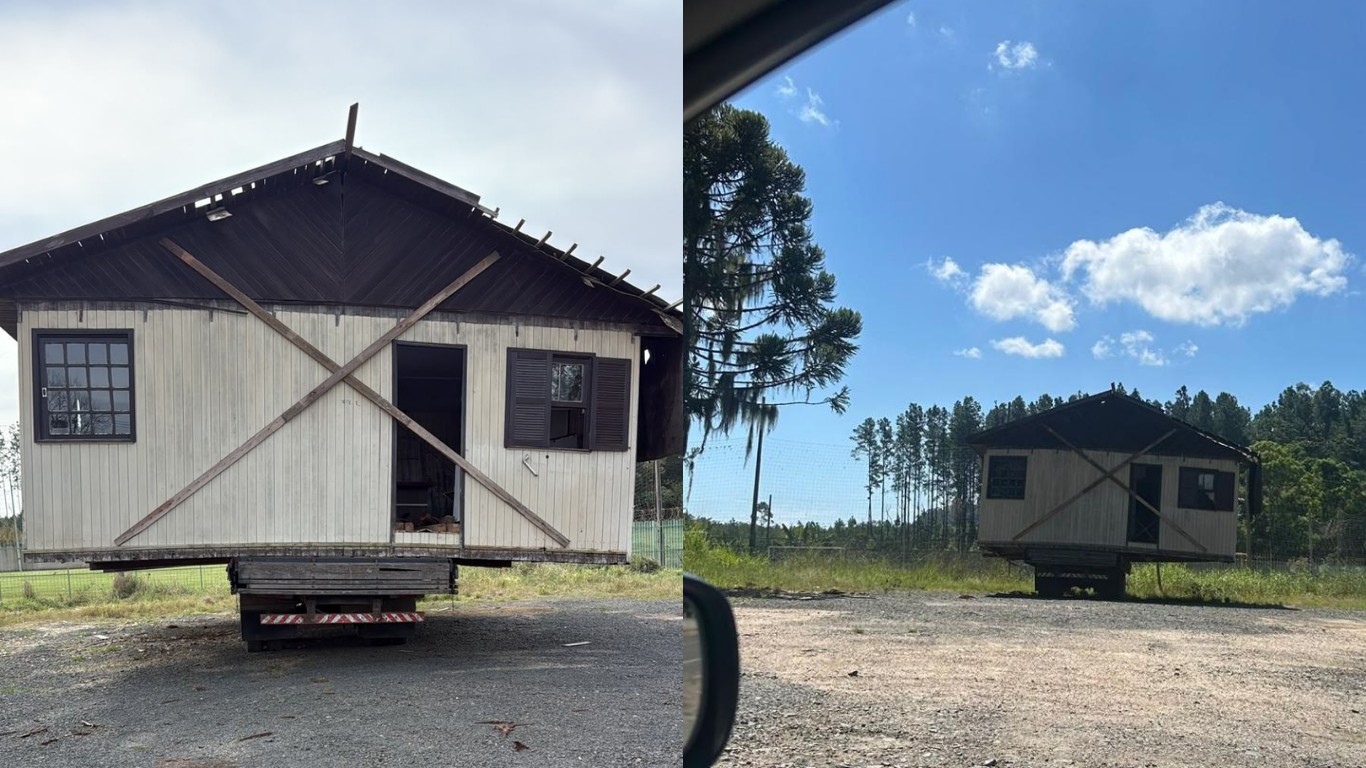
A wooden house, abandoned for four months atop a truck in Criciúma, Santa Catarina (SC), Brazil, presents a significant structural risk and threatens to collapse. The precarious situation, located near the Casimiro Staszuski Basic School and the Polish Center in the Linha Batista neighborhood, has prompted action from the city's Civil Defense. The structure is leaning severely to the right, with loose steel cables and bent support rails, posing an imminent danger to pedestrians, especially children who frequent the area. The truck and house were left on private property in March, reportedly due to issues with transport permits and uncertainty about the final delivery location. Local residents and community leaders have expressed apprehension and attempted prior contact with the truck's owner without success. The Civil Defense located the owner on Tuesday, April 4th, and has issued a deadline of Wednesday evening, April 5th, for the vehicle's removal. If the owner fails to comply, the Criciúma City Hall, in conjunction with the Directorate of Transit and Transport (DTT), will forcibly remove the truck and house on Thursday, April 6th. The property where the vehicle is parked does not belong to the truck's owner or the house's intended recipient.
The incident highlights a breakdown in urban planning and property management, where abandoned structures can create public safety hazards. The delayed response, despite the prolonged abandonment since March and proximity to a school, suggests potential gaps in municipal oversight or enforcement mechanisms for unregistered vehicles and structures on private land. Future considerations might involve establishing clearer protocols for identifying and addressing such hazards proactively, potentially through inter-agency task forces involving transit, civil defense, and property authorities. This situation underscores the need for robust regulatory frameworks that balance property rights with public safety imperatives, particularly in densely populated areas.
AI-generated to prompt reflection — not editorial opinion, not advice, not a statement of fact. How this works.
