Abandoned Mansion Collapses in Historic Center of Cuiabá
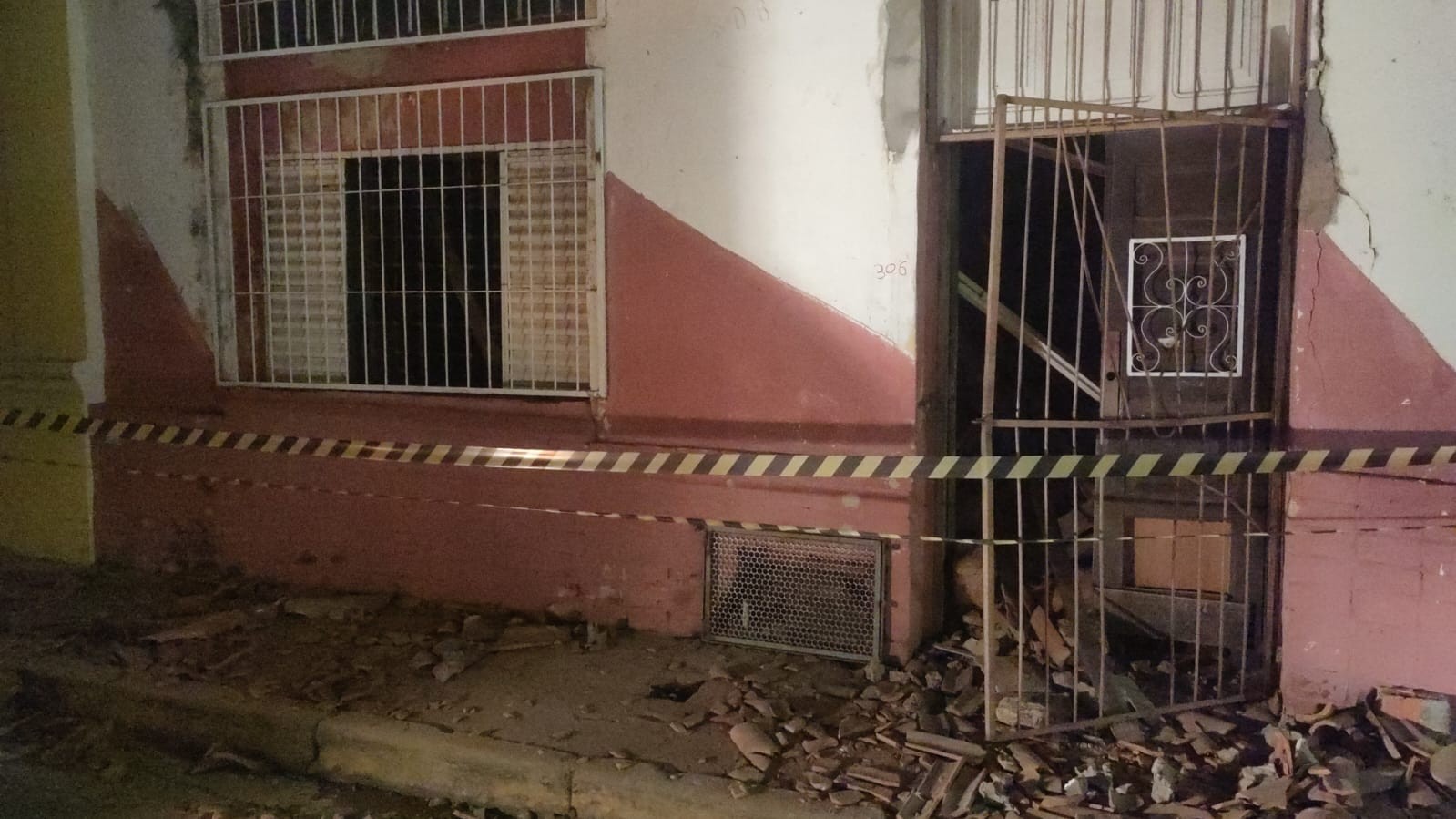
An abandoned mansion collapsed on Wednesday night, September 1st, on Rua Sete de Setembro in the Historic Center of Cuiabá, Brazil. The incident occurred around 7 PM and required the intervention of Civil Defense and Fire Department teams. Fortunately, no injuries were reported. The area has been cordoned off for safety reasons. According to the Cuiabá City Hall, a technical report will be issued to assess the building's structural integrity and determine the next steps. Local reports indicate the mansion had been vacant for years and showed signs of deterioration. It was reportedly occupied by homeless individuals who had created an opening to a nearby alley. A couple occupying the property was allegedly removing doors to sell when a structural failure occurred, leading to the collapse. The incident also caused minor damage to an adjacent building, including a compromised roof and a crack in the shared wall. The City Hall stated that Civil Defense has secured the site and will provide a technical opinion. Based on this, the Municipal Secretariat of Planning and Urban Development will notify the owner to address the necessary measures. The municipality highlighted the revitalization of the Historic Center as a priority, with ongoing efforts including investment incentives, public service installations, cultural events, and preservation initiatives in partnership with the National Historical and Artistic Heritage Institute (Iphan). The goal is to revitalize the area, increase foot traffic, encourage public space utilization, and enhance safety for residents, businesses, and visitors.
The collapse of the abandoned mansion underscores the challenges of urban decay and property maintenance in historic districts. The incident highlights a potential disconnect between municipal revitalization goals and the immediate realities of neglected infrastructure and informal occupation. While the city plans for long-term preservation and economic development, the immediate safety hazard posed by the derelict structure indicates a need for more proactive enforcement of property codes and potentially emergency measures for buildings exhibiting critical deterioration. The situation also raises questions about the city's capacity to manage transient populations within historically significant areas and the effectiveness of current partnerships with heritage preservation bodies like Iphan in preventing such structural failures. Future strategies may need to balance heritage conservation with urgent public safety imperatives, possibly through expedited remediation processes for at-risk properties or alternative housing solutions for vulnerable populations occupying unsafe structures.
AI-generated to prompt reflection — not editorial opinion, not advice, not a statement of fact. How this works.