Abhijit Dipke Continues Hunger Strike on Day Two; Plans Parliament March
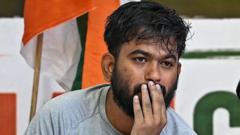
Abhijit Dipke has entered the second day of his hunger strike, which began following the police escorting Sonam Wangchuk to Safdarjung Hospital on Saturday. The details of his planned march to Parliament and further strategies were discussed during this period. Wangchuk, a prominent figure, was taken to the hospital, prompting Dipke's decision to protest through fasting. The situation highlights a growing concern that has led to this form of demonstration. Further information regarding the specific demands or reasons behind the hunger strike and the planned parliamentary march is expected to emerge as the protest continues. The involvement of Sonam Wangchuk and the subsequent actions by Abhijit Dipke suggest a coordinated effort or a shared cause. The Safdarjung Hospital's role in Wangchuk's situation is noted as the immediate precursor to Dipke's protest. The unfolding events are being closely watched for potential escalation or resolution.
The hunger strike initiated by Abhijit Dipke, following Sonam Wangchuk's hospitalization, signals a potent form of civil disobedience aimed at drawing attention to specific grievances. The planned march on Parliament indicates a strategic escalation, seeking direct engagement with legislative bodies. Such actions often arise from perceived failures in established channels of communication or redress. From a systems perspective, these protests can serve as critical feedback mechanisms, highlighting societal pressures or policy shortcomings that might otherwise be overlooked by governing structures. The effectiveness of these tactics often depends on their ability to mobilize public opinion and create leverage for negotiation, prompting a re-evaluation of policy or governance approaches by the state.
AI-generated to prompt reflection — not editorial opinion, not advice, not a statement of fact. How this works.