Absences at Ali Khamenei's Funeral: Who Was Not Seen?
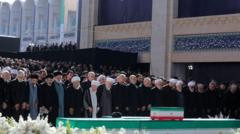
The funeral rites for Ali Khamenei, the former Supreme Leader of Iran, have concluded with his burial in Mashhad. The six-day period following his death served not only as a farewell but also as a stage for demonstrating power and presenting competing narratives about Iran's political landscape. Thousands of images were captured by news and non-news cameras during this time, each now serving as raw material for analysis, interpretation, and political debate across media and social networks. The attendance and notable absences of various figures, from religious authorities to military commanders, are being scrutinized. These observations are being used to infer political standings and potential shifts within the Iranian establishment. The event has highlighted the complex dynamics and underlying tensions within the country's power structures. Observers are dissecting the visual evidence to understand the implications for future political developments.
The funeral of a prominent political figure often becomes a focal point for observing and interpreting power dynamics within a state. The scrutiny of attendance and notable absences can reveal internal alignments, rivalries, and the perceived influence of different factions. In the context of Iran, such events offer insights into the complex interplay between religious and military leadership, and how these relationships are publicly projected. Analyzing these visual cues can help understand the stability of the current regime and potential future political trajectories, particularly in relation to succession and governance structures. The media's role in framing these events also shapes public perception and can be a tool for asserting or contesting narratives of authority and legitimacy.
AI-generated to prompt reflection — not editorial opinion, not advice, not a statement of fact. How this works.