Absences at Ali Khamenei's Funeral: Who Was Not Seen Among Clerics and Military Commanders?
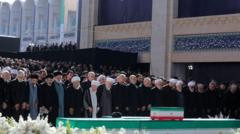
The funeral rites for Ali Khamenei have concluded with his burial in Mashhad. The six-day period served not only as a farewell to the former leader of the Islamic Republic but also as a stage for displaying power and a contest of narratives and interpretations regarding Iran's political situation. News and non-news cameras captured thousands of images during this time, each now serving as raw material for analysis, interpretation, and political debate across media and social networks. The event offered a complex tableau, with the presence and notable absences of various figures providing fodder for understanding the internal dynamics and power structures within Iran. Observers closely scrutinized who attended and who did not, seeking clues about political alignments and potential shifts in influence. The funeral became a focal point for dissecting the regime's stability and the public's perception of its leadership. The extensive visual record generated is expected to fuel ongoing discussions and analyses of Iran's political landscape for some time.
The funeral of a prominent national leader often serves as a critical juncture for observing political alignments and power dynamics. The reported scrutiny of attendees and absentees highlights how such events are leveraged to signal influence and political standing within a state apparatus. In the context of Iran, where leadership transitions can be sensitive, the composition of those present or absent at a funeral can be interpreted as indicators of internal consensus or dissent, and the relative strength of various factions. This observation underscores the importance of symbolic representation in political messaging, particularly in systems where overt political contestation may be constrained. Future political stability and succession planning may be indirectly illuminated by the patterns observed during these significant national moments.
AI-generated to prompt reflection — not editorial opinion, not advice, not a statement of fact. How this works.