Abundance Erodes Value: The Impact of Free and Open-Source AI
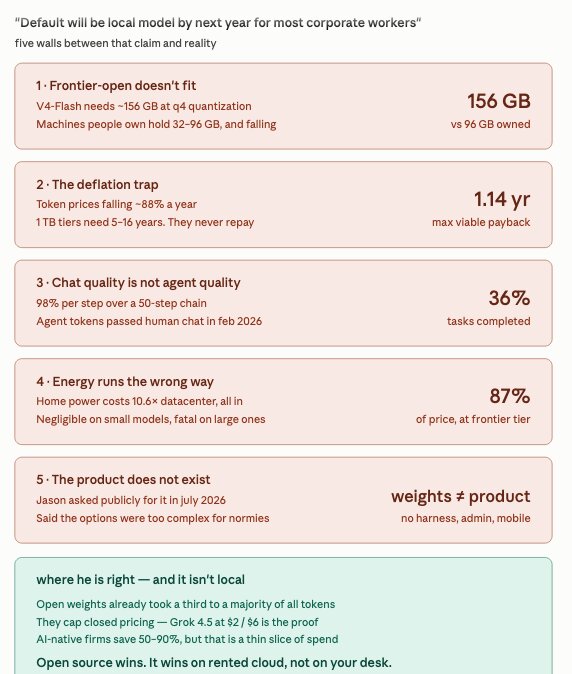
The principle that abundance diminishes value is highlighted, using the analogy of tap water, which is essential but not a commercial industry due to its widespread availability. The article posits that if open-source AI models, such as Deepseek and others, become indistinguishable from proprietary ones for the vast majority of queries (95%), the economic implications will be significant. It suggests that corporations will likely adopt open-source solutions, impacting the market for AI services. This shift implies that the perceived value of AI will decrease as its accessibility and cost approach zero. The core argument is that what is freely available loses its economic leverage, transforming it from a revenue-generating sector into a utility.
The increasing availability of powerful open-source AI models presents a fundamental challenge to existing business models that rely on proprietary technology. As performance parity is reached for common use cases, the economic incentive for businesses to pay for closed-source solutions diminishes, shifting the landscape towards open-source adoption. This transition could democratize AI capabilities but also necessitates a re-evaluation of how value is created and captured in the AI economy. Future market dynamics may depend on factors beyond raw performance, such as specialized applications, integration services, and robust support infrastructure, rather than the core AI model itself.
AI-generated to prompt reflection — not editorial opinion, not advice, not a statement of fact. How this works.