Acre's Regional Electoral Court Guides Parties on Candidacy Registration for 2026 Elections
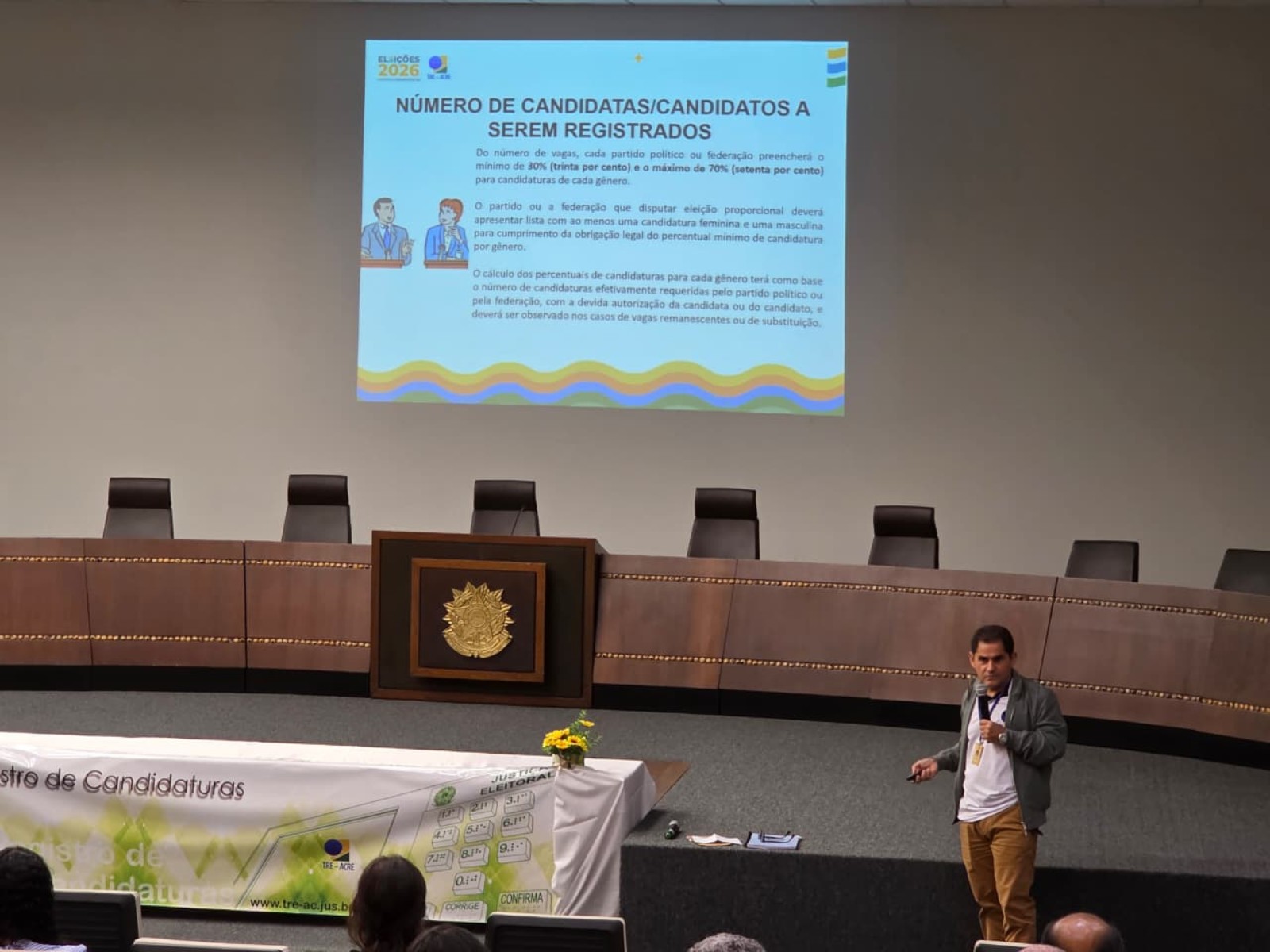
The Regional Electoral Court of Acre (TRE-AC) convened with political parties, federations, and legal representatives in Rio Branco on Wednesday, May 8th, to provide guidance on the registration of candidacies for the upcoming 2026 elections. The meeting, held at the court's headquarters, also introduced the systems to be used for financial accountability during the electoral process. Sandro Roberto, the judicial secretary of TRE-AC, stated that the session was also intended for lawyers, members of the Regional Electoral Prosecutor's Office, and pre-candidates. A significant change for this election cycle is that all registration requests must be submitted exclusively online by August 15th at 7 PM Brasília time, with campaign financial reports also to be filed digitally. The primary aim of the meeting was to ensure that party and federation representatives understand all aspects of candidacy registration, fostering collaboration to minimize errors and doubts. The court emphasized the importance of reinforcing candidacy parameters and preventing irregularities. The elections are scheduled for October 4th, with a potential second round on October 25th in municipalities exceeding 200,000 registered voters. In Acre, 614,753 voters are eligible to participate across 22 municipalities. The judiciary also highlighted changes for the 2026 elections, proper procedures for submitting applications, integration between the Candidacy System and the Electronic Judicial Process (PJE), and guidance on using CANDex for submitting electoral data. The TRE-AC aims to foster closer ties with political parties to streamline the registration process and enhance efficiency. For the elections, 701 polling stations and 2,417 voting sections are planned, with approximately 9,500 poll workers registered.
This meeting between the Regional Electoral Court and political parties in Acre highlights the administrative and procedural preparations for the 2026 elections. The emphasis on online submissions and integrated systems suggests a broader trend towards digital governance in electoral processes, aiming to increase efficiency and reduce human error. The court's proactive approach in providing guidance aims to preempt potential legal challenges and ensure compliance with electoral laws, thereby reinforcing the integrity of the democratic framework. As technological integration deepens, electoral bodies face the ongoing challenge of ensuring equitable access and digital literacy among all participants, particularly in regions with varying levels of technological infrastructure. The focus on clear guidelines and reduced errors reflects a systemic effort to streamline the electoral machinery, which could set precedents for future elections by standardizing digital workflows and accountability measures.
AI-generated to prompt reflection — not editorial opinion, not advice, not a statement of fact. How this works.