Activist Sonam Wangchuk Continues Hunger Strike in Delhi, Urges Support for Cause
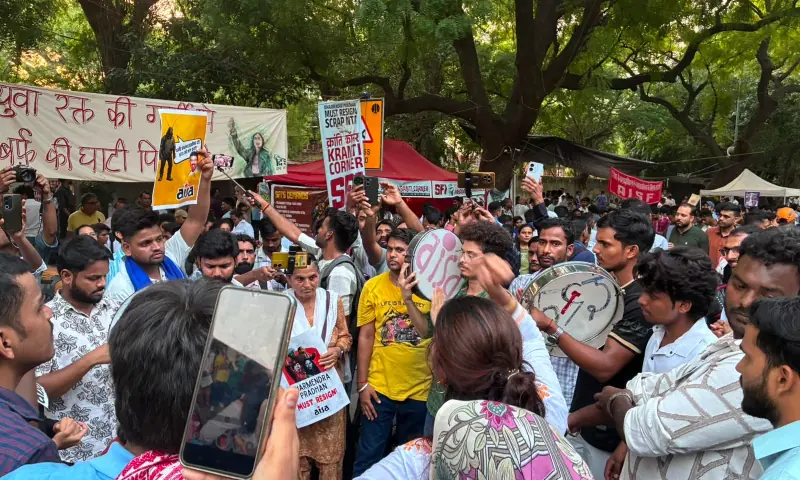
Indian activist and Ramon Magsaysay Award recipient Sonam Wangchuk is on the 19th day of a hunger strike in New Delhi, reportedly experiencing deteriorating health. Wangchuk, known for innovations like the ice stupa, is protesting against examination scandals and unemployment. The protest, organized by the Cockroach Janata Party (CJP), began on June 20th, demanding the resignation of Education Minister Dharmendra Pradhan due to the leak and subsequent cancellation of the NEET medical college entrance exam. CJP spokesperson Vijeta Dahiya stated that 22 students died by suicide following this year's NEET leak, with higher numbers over previous years. Wangchuk has urged supporters not to focus on saving him but to channel their energy into advancing the cause and pressuring the government. Approximately 30 people have participated in the hunger strike, with many more observing it from home. The protest at Jantar Mantar has been described as a vibrant display of democracy, featuring street theatre, lectures, and conversations, fostering a sense of solidarity and hope. Despite the intense heat and large crowds, the venue has remained orderly and safe, with no reported incidents of misconduct. The CJP plans a march from Jantar Mantar to Parliament on July 20th, expecting thousands of participants, though concerns about potential pushback and violence remain. The movement emphasizes non-violent resistance, drawing parallels to Mahatma Gandhi's methods, and aims to demonstrate that peaceful protest can effect change.
The hunger strike by Sonam Wangchuk and the associated CJP movement highlights significant public discontent regarding educational integrity and youth employment in India. The protest's framing as a continuation of India's tradition of non-violent civil disobedience, exemplified by figures like Gandhi and G.D. Agrawal, lends it moral weight. However, the reliance on extreme personal sacrifice, such as hunger strikes, raises questions about the sustainability of such protest methods and the potential for exploitation of individual well-being for political ends. As AI increasingly automates administrative tasks and potentially reshapes the job market, the underlying issues of educational access, fairness, and the value of human capital will become even more critical. Future governance models will need to address these systemic challenges proactively, moving beyond reactive measures to ensure equitable opportunities and prevent societal unrest driven by perceived systemic failures.
AI-generated to prompt reflection — not editorial opinion, not advice, not a statement of fact. How this works.