Adamantisaurus: 15-meter dinosaur named after São Paulo geological formation
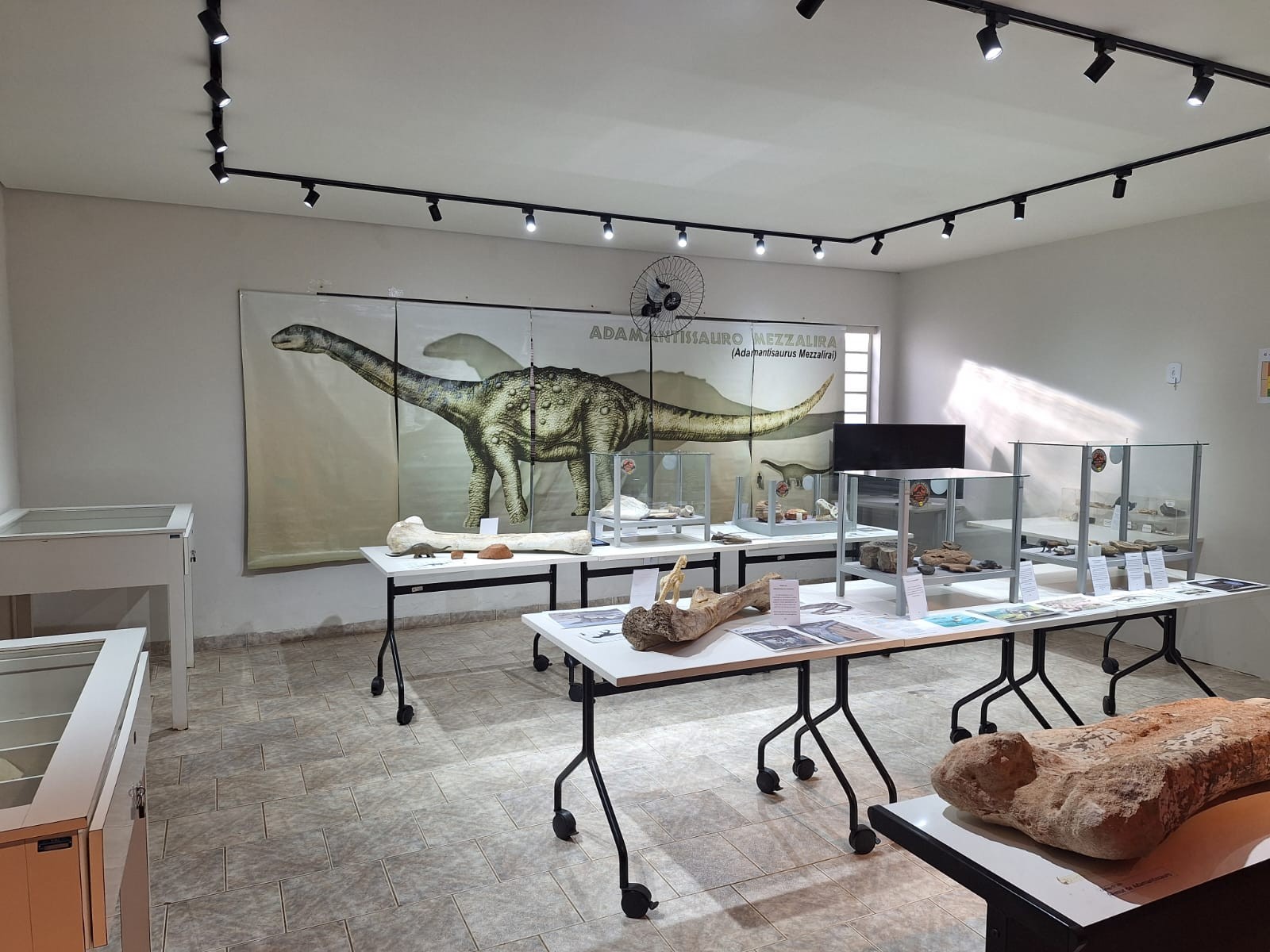
A 15-meter-long herbivorous dinosaur, named Adamantisaurus mezzalirai, has been identified, with its name honoring a geological formation in the interior of São Paulo, Brazil. The fossils of this giant, which roamed the Earth over 80 million years ago, were initially discovered in the 1950s near Florida Paulista by railway workers. The scientific description of the species, however, was only published in 2006 by paleontologists Rodrigo Santucci and Reinaldo Bertini. Adamantisaurus belonged to the sauropod group, characterized by their long necks, heavy bodies, and quadrupedal stance, resembling elephants with their columnar limbs. The dinosaur measured approximately 15 meters in length and six meters in height, possessing a small head and a long tail. Six of its vertebrae, recovered during the initial discovery, are now housed at the Museu da Água Branca in São Paulo. Other fossils from the region are displayed in various local institutions, including the Museu de Paleontologia “Professor Pepe” at Unesp in Presidente Prudente. The name "Adamantisaurus" references the Adamantina Formation, a geological unit in western São Paulo, while "mezzalirai" pays tribute to Sérgio Mezzalira, a geologist who preserved the fossils during railway construction. Educational initiatives, like workshops at the Museu "Setsu Onishi" in Adamantina, aim to engage students with paleontology, highlighting its multidisciplinary nature. These efforts also serve to foster a sense of cultural belonging and resist scientific colonialism by keeping regional paleontological heritage within its area of origin.
The discovery and naming of Adamantisaurus highlight the ongoing scientific exploration of Brazil's paleontological heritage. The preservation and display of these fossils within the region of their origin serve a dual purpose: fostering local cultural identity and countering historical trends of scientific colonialism. By making these discoveries accessible, educational institutions and museums in western São Paulo are not only preserving scientific data but also democratizing access to natural history. This approach aligns with a broader global movement to decenter traditional scientific hubs and empower local communities with their own heritage, potentially inspiring future generations of scientists from the region.
AI-generated to prompt reflection — not editorial opinion, not advice, not a statement of fact. How this works.