Adaptive Optics Light Sheet Microscopy Enables Fast Volumetric Imaging of Seizures
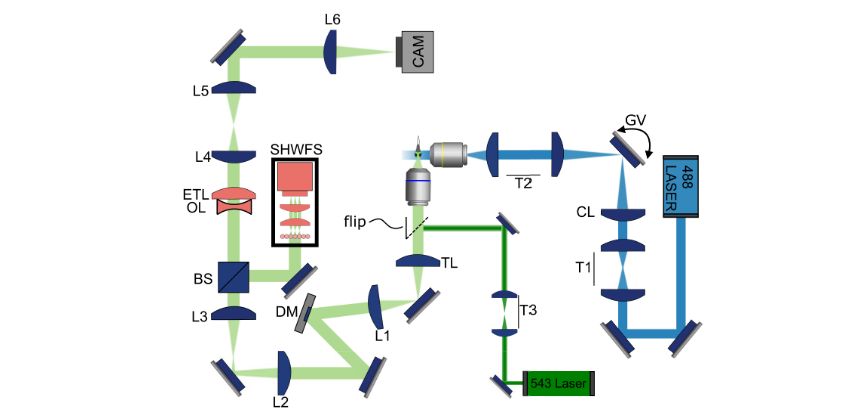
Researchers have developed a novel method using adaptive optics light sheet microscopy to rapidly image seizures in biological tissues. This technique is crucial for understanding transient events like epileptic seizures. Light sheet microscopy is a standard tool for such observations, offering significant advantages in imaging speed and reduced phototoxicity. The new adaptive optics system enhances this capability by correcting optical aberrations in real-time. This allows for clearer and faster volumetric imaging deep within tissues. The ability to capture these rapid seizure dynamics with high resolution is a significant advancement for neuroscience research. It promises to provide unprecedented insights into the mechanisms underlying epilepsy and other neurological disorders. The development could lead to better diagnostic tools and therapeutic strategies in the future. This breakthrough addresses a long-standing challenge in observing fast biological processes in their native environment.
This technological advancement in microscopy offers a powerful new lens for observing neurological events, specifically seizures. By improving the speed and clarity of volumetric imaging, researchers can gain more precise data on the transient dynamics of epileptic activity. This enhanced observational capability, free from the constraints of earlier methods, could accelerate the discovery of underlying mechanisms and potential therapeutic targets. The development highlights the ongoing synergy between optical engineering and biological research, pushing the boundaries of what can be observed at the cellular and tissue level. Future applications may extend to studying other rapid neurological phenomena, potentially transforming our understanding of brain function and dysfunction over the next decade.
AI-generated to prompt reflection — not editorial opinion, not advice, not a statement of fact. How this works.