AfD Congress Sees Protests; Leaders Re-elected Amid Controversy
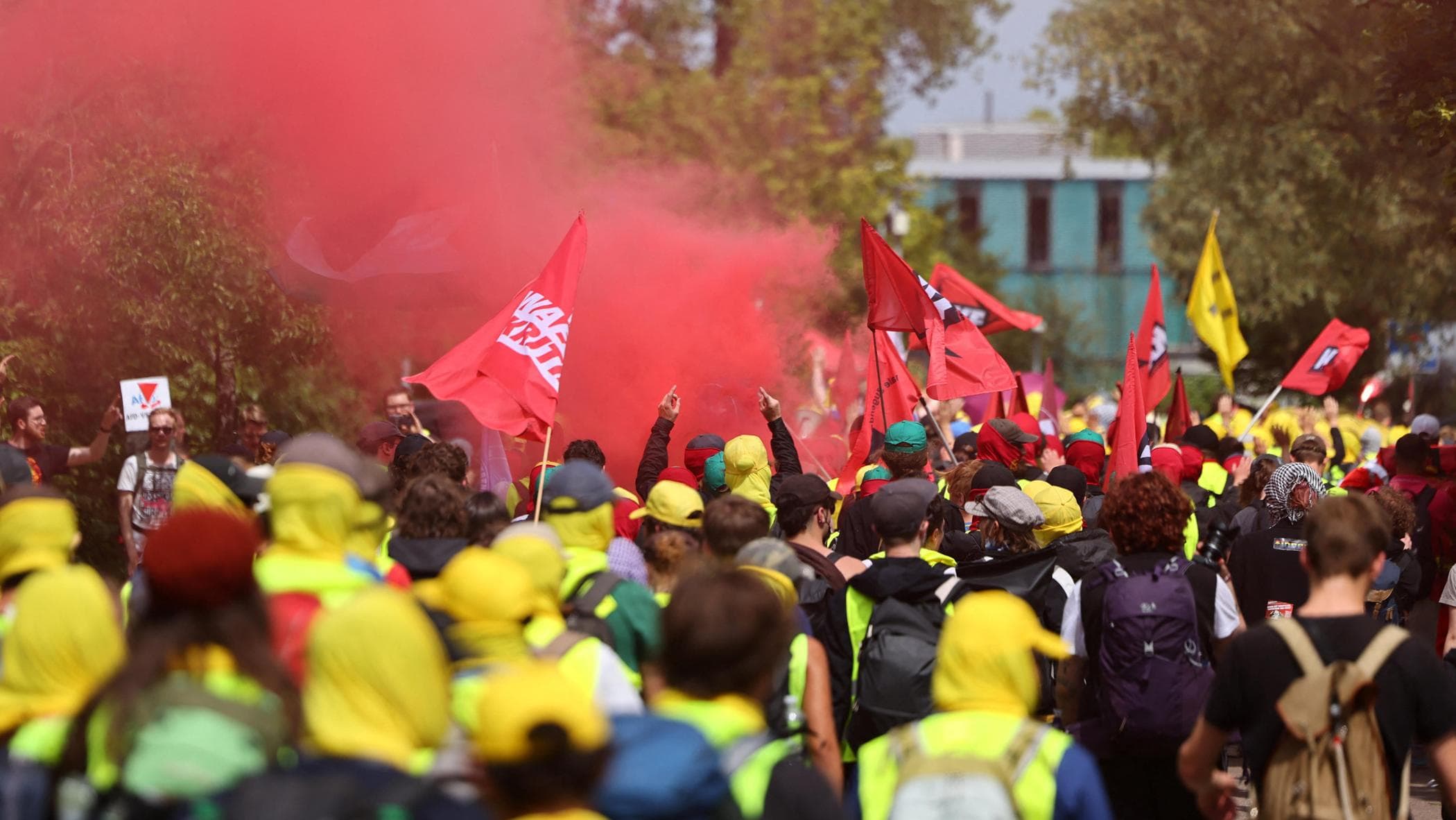
The German far-right party Alternative for Germany (AfD) held its congress, resulting in the re-election of its two leaders. The congress took place in the same location where the Hitler Youth was founded in 1926, a site also known for Adolf Hitler's first public display of the Nazi salute. The event was met with significant protests, requiring the deployment of over a thousand police officers to manage the situation. Party leader Alice Weidel declared the AfD to be "the party of the people" and stated that they would not be deterred by opposition. The congress proceeded despite the challenges posed by the demonstrations.
The AfD's choice of venue for its congress, historically linked to the Nazi era, raises questions about its strategic communication and historical positioning. While the party leadership frames this as a reclamation of national narrative, critics view it as an attempt to normalize or evoke past ideologies. The significant police presence underscores the deep societal divisions and the contentious nature of the AfD's platform. This event highlights the ongoing struggle in Germany to reconcile national identity with historical responsibility, particularly as far-right movements gain traction across Europe. The party's assertion of being "the party of the people" in the face of widespread protest suggests a strategy of appealing to a specific segment of the electorate while potentially alienating others, a dynamic that will likely shape its future electoral prospects and societal integration.
AI-generated to prompt reflection — not editorial opinion, not advice, not a statement of fact. How this works.