Afghanistan Flood: Dozens Missing, 23 Dead in Nuristan Province
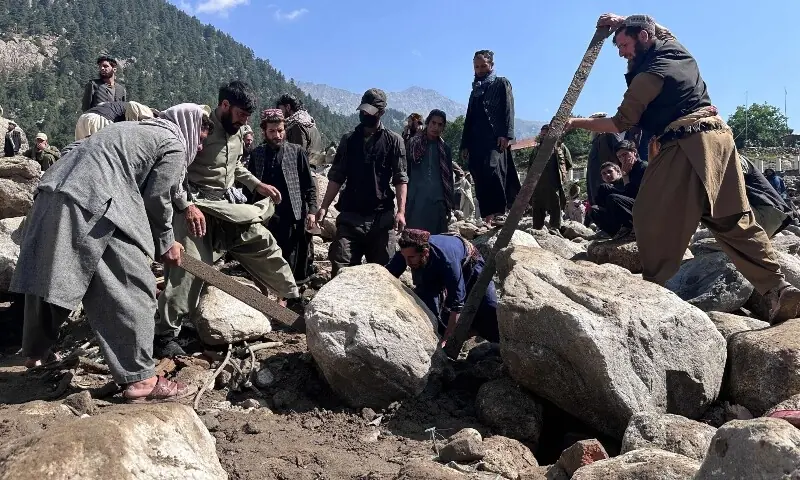
At least 23 people have died and around 100 are missing following a devastating flood in Nuristan province, eastern Afghanistan. The deluge, which occurred on Monday, July 21, 2026, smashed through the provincial capital, Parun, trapping residents under mud and boulders. Rescuers, including dozens of volunteers from the Afghan Red Crescent Society and military personnel, are struggling to reach those affected, with many searching for the missing using only their bare hands and wooden poles due to the extensive debris. Pharmacist Farid Gul Zaheer, 34, described the event as the most dangerous flood he had ever witnessed, comparing the sound to an earthquake and hearing screams. The flood destroyed multiple shops and brought huge boulders that damaged buildings. The mayor of Parun and other government employees are among the missing. Zakirullah Zaki, manager of the Spogmai Hotel, reported that other hotels, markets, and shops were completely destroyed, though his hotel remained standing. The Afghan Red Crescent is providing food, water, and tents to displaced individuals. The United Nations is assessing the disaster, while Afghanistan's defense ministry has deployed the military to aid relief efforts. Survivors are reportedly traumatized, having not slept all night. Afghanistan's vulnerability to climate change and increased flooding have been cited as contributing factors to the humanitarian crisis by Mawlavi Matiul Haq Khalis, head of the environmental protection agency.
This event highlights the escalating vulnerability of regions like Afghanistan to extreme weather events, exacerbated by climate change. The limited capacity for rapid disaster response, evident in the reliance on manual rescue efforts and the struggle to clear debris, underscores systemic challenges in infrastructure and preparedness. The destruction of essential services and the displacement of communities point to significant long-term recovery needs. Future efforts should focus on enhancing early warning systems, investing in climate-resilient infrastructure, and strengthening local and national disaster management capabilities to mitigate the impact of such recurring tragedies and address the underlying environmental factors contributing to the humanitarian crisis.
AI-generated to prompt reflection — not editorial opinion, not advice, not a statement of fact. How this works.