African Giant Snails Proliferate in Natal After Rains; Residents Advised on Control
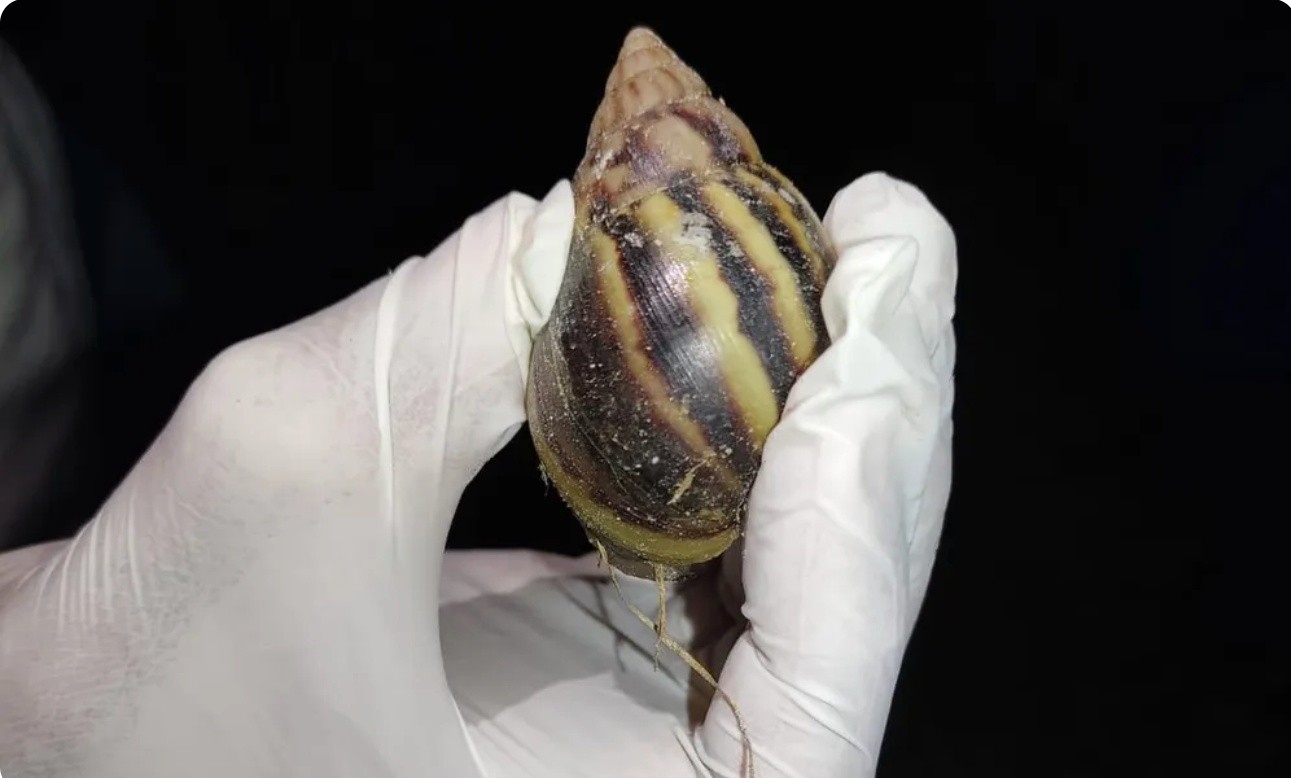
Following recent rainfall in Natal, Brazil, a significant increase in African giant snails (Achatina fulica) has been observed across various neighborhoods. These invasive mollusks are commonly found near drainage lagoons, in areas with overgrown vegetation, and where debris and organic matter accumulate. Residents in areas like Capim Macio and Candelária have reported widespread snail presence in gardens, on sidewalks, and within condominium green spaces, particularly during early mornings and late afternoons. Some residents are attempting to manage the snails by collecting them in buckets with coarse salt, though this method is not officially recommended. The Municipal Health Secretariat of Natal, through its Zoonosis Surveillance Unit (UVZ), primarily focuses on species identification and providing guidance to residents. The responsibility for collecting and eliminating the snails lies with property owners. The African giant snail is a known host for parasites that can cause angiostrongyliasis, a disease transmitted through contact with the animal's secretions under specific conditions, though no cases have been reported in Natal to date. The UVZ recommends wearing protective gloves or plastic bags when handling the snails. A solution of 1 liter of water to 500 grams of salt is advised for disposal, rather than applying salt directly to the snails to avoid potential irritation from expelled fluids. Egg masses, which can remain viable for up to two years, should also be destroyed manually with hand protection, followed by the application of quicklime to the soil. Property owners are urged to maintain clean grounds, with mowed vegetation and no construction debris or organic matter, to reduce snail habitats. Each snail can lay approximately 400 eggs, and their hermaphroditic nature facilitates rapid reproduction, leading to new infestations after rainy periods. For further information and guidance, residents can contact the Zoonosis Surveillance Unit via WhatsApp at (84) 3232-8235.
The proliferation of the invasive African giant snail in Natal, exacerbated by rainfall, highlights the persistent challenge of managing non-native species in urban environments. Property owners bear the primary responsibility for control, a decentralized approach that may lead to inconsistent outcomes. Public health guidance focuses on safe elimination methods, acknowledging the snail's potential as a disease vector, though no local transmission has been confirmed. The rapid reproduction cycle and resilience of the species, coupled with suitable environmental conditions post-rain, underscore the need for proactive, community-wide sanitation and habitat management strategies. Future efforts could explore integrated pest management techniques that go beyond individual property owner actions to address systemic vulnerabilities, potentially involving municipal landscaping policies and public education campaigns that emphasize ecological balance and the long-term consequences of invasive species.
AI-generated to prompt reflection — not editorial opinion, not advice, not a statement of fact. How this works.