Aggressive Buzzard Attacks Pedestrians and Cyclists in Groningen
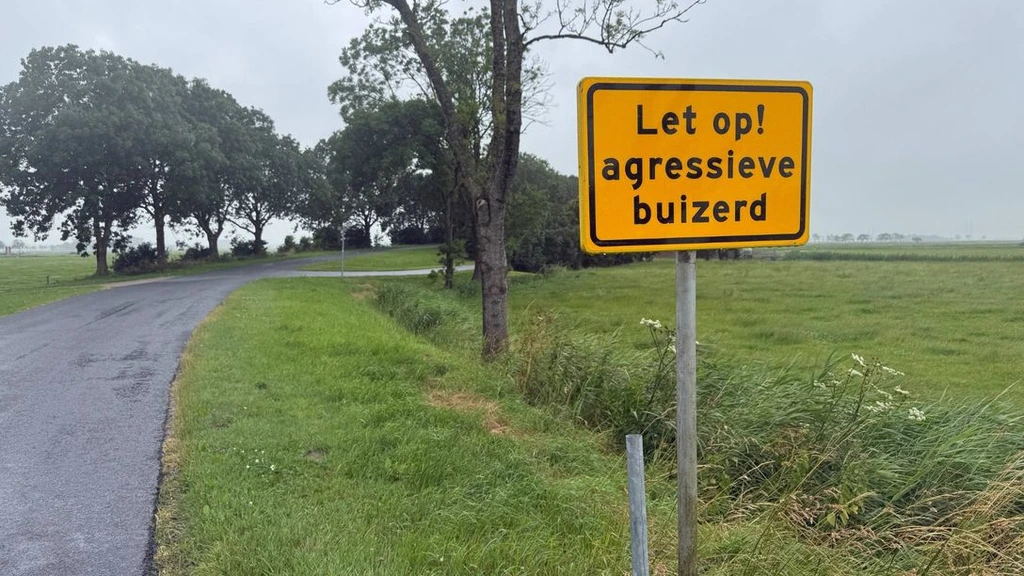
Residents and travelers in the municipalities of Het Hogeland and Eemsdelta in Groningen, Netherlands, are being warned about an aggressive buzzard. The protected bird of prey is attacking people due to its nesting season. A warning sign has been placed on the road between Bedum and Stedum. One man reported being attacked several times, describing the sensation as something being thrown at his head, though he was unharmed as the bird released him quickly. Nature photographer Wilco van der Laan explained that the buzzard is highly protective of its young, which are currently in a nest located high in a tree along the Stedumerweg, near the road. Van der Laan noted that the area provides a suitable breeding ground with ample mice. While he sees potential for action shots, he acknowledges that others, especially those with young children, may find the situation concerning. As a protected species in the Netherlands, the buzzard and its nest cannot be disturbed or relocated, meaning residents must adapt to the situation. The aggressive behavior is expected to subside after the breeding season, which typically runs from March to August.
The reported aggressive behavior of the buzzard, while a natural response to protect its young during the breeding season, highlights the ongoing tension between human infrastructure and wildlife habitats. The protected status of the bird and its nest means that local authorities and residents must accommodate its presence, even when it causes inconvenience or potential risk. This situation underscores the challenges of urban and rural planning in areas where human activity intersects with protected ecosystems. Over the next decade, as urbanization continues and conservation efforts intensify, finding sustainable coexistence strategies will become increasingly critical. This may involve exploring better land-use planning, public education campaigns about wildlife behavior during sensitive periods, and potentially more innovative, non-disruptive methods for managing human-wildlife conflict in shared spaces.
AI-generated to prompt reflection — not editorial opinion, not advice, not a statement of fact. How this works.