AI Agent's Physical World Integration: Keynote by Yin Qi at WAIC 2026
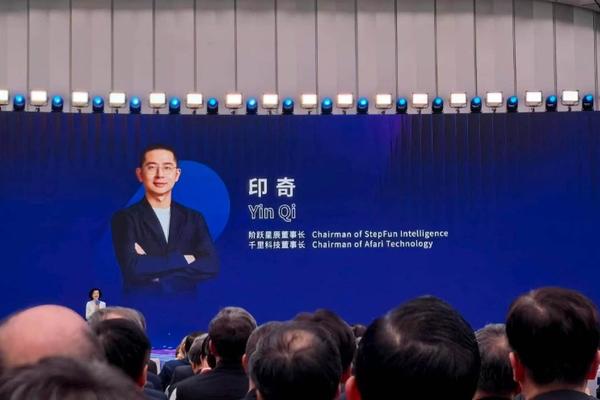
At the opening ceremony of the 2026 World Artificial Intelligence Conference (WAIC 2026) on July 17th, Yin Qi, Chairman of Jiejie Xingchen and Qianli Technology, delivered a keynote speech titled "When Intelligent Agents Enter the Physical World." He highlighted the significant evolution of AI, noting that 15 years ago, AI entrepreneurship was a niche pursuit, but it has now become a global consensus. Today's AI researchers and entrepreneurs benefit from decades of scientific exploration and advancements in information technology, mobile internet, cloud computing, semiconductors, and new energy industries. Yin Qi believes that by 2026, AI models are crossing a critical threshold, advancing from tasks lasting seconds to independent operations lasting tens of hours, positioning the industry at the foot of the AGI peak. He identified programming as a key metric for AI's leap in capability, alongside natural language processing. As intelligent agent models integrate with next-generation products, intelligence is transitioning from digital screens to the physical world, with agents evolving from chat tools to fundamental units of productivity capable of perception, decision-making, and task execution. This integration promises to empower individuals, such as engineers and designers, with the capabilities of an entire team.
Yin Qi outlined three structural transformations driven by the intelligent agent wave: new systems, new carriers, and new networks. New systems involve Agentic OS connecting models with data, tools, and devices, determining the agent's operational reach. New carriers will shift terminal design towards "human-machine symbiosis," with devices like computers, phones, cars, and robots acting as different "bodies" for a single agent, enabling cross-terminal continuity, migration, and collaborative execution. New networks, such as A2A networks, will connect humans and agents, establishing agent identities, capabilities, and credit, facilitating autonomous collaboration and transactions, and forming the infrastructure for an intelligent agent economy. He also stressed that the integration of intelligent agents into the real world necessitates a reordering of existing structures, raising critical questions about accountability, identity verification, permission control, and traceability. The future, he posited, is not one of human replacement but of co-evolution, where human potential is amplified tenfold as intelligent agents enter the physical realm.
AI's progression into the physical world, as articulated by Yin Qi, signifies a paradigm shift from digital task execution to embodied intelligence. The concept of "human-machine symbiosis" and agents acting as distinct "bodies" across various devices points to a future where computational capabilities are seamlessly integrated into daily life and work. This integration presents significant opportunities for enhanced productivity and personalized assistance. However, it also introduces complex challenges related to governance, ethics, and societal adaptation. Establishing robust frameworks for accountability, trust, and traceability will be paramount to ensure that this technological advancement benefits humanity equitably. The development of Agentic OS and A2A networks suggests a move towards decentralized, intelligent ecosystems, which could reshape economic and social structures by creating new forms of digital identity and collaborative networks. The focus on co-evolution rather than replacement frames this transition as a collaborative endeavor, emphasizing the amplification of human capabilities through intelligent augmentation.
AI-generated to prompt reflection — not editorial opinion, not advice, not a statement of fact. How this works.