AI Avatar Campaigns for Brazil's Barred Ex-President Bolsonaro
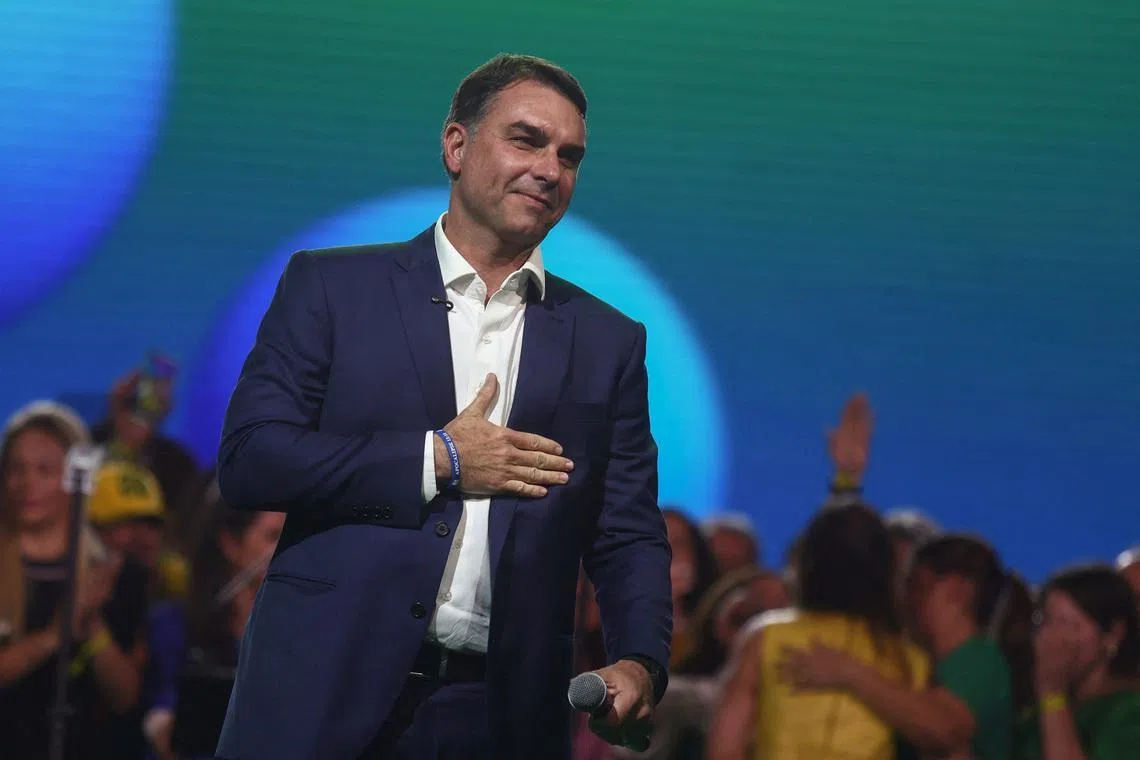
Former Brazilian President Jair Bolsonaro, currently under house arrest for alleged anti-democratic actions, made a virtual appearance at his son Flavio Bolsonaro's presidential campaign launch on Saturday. This surprise appearance was facilitated by an AI-generated avatar, raising significant questions about the potential impact of artificial intelligence on the upcoming October presidential election in Brazil. The use of AI technology in political campaigning could introduce new dynamics and challenges to electoral processes in Latin America's largest economy. Bolsonaro's legal situation prevents him from participating directly in the election, making the AI avatar a novel method for his continued political presence. The development prompts a broader discussion on the ethical and practical implications of using AI in politics, particularly concerning voter engagement and the integrity of democratic discourse. The effectiveness and reception of such AI-driven political communication remain to be seen as the election approaches.
The emergence of AI-generated avatars in political campaigning, as seen with Jair Bolsonaro's virtual appearance, presents a complex challenge to electoral integrity. While offering a novel way for barred candidates to maintain a public presence, it also introduces potential avenues for circumventing legal restrictions and manipulating public perception. This development underscores the need for robust regulatory frameworks to govern the use of AI in political discourse, ensuring transparency and preventing undue influence. As AI technology advances, its integration into political strategies could profoundly reshape democratic processes, necessitating a proactive approach to safeguard fair elections and informed public debate in the coming decade.
AI-generated to prompt reflection — not editorial opinion, not advice, not a statement of fact. How this works.