AI Boom Disrupts Memory Market, With Potential for Severe Downturn
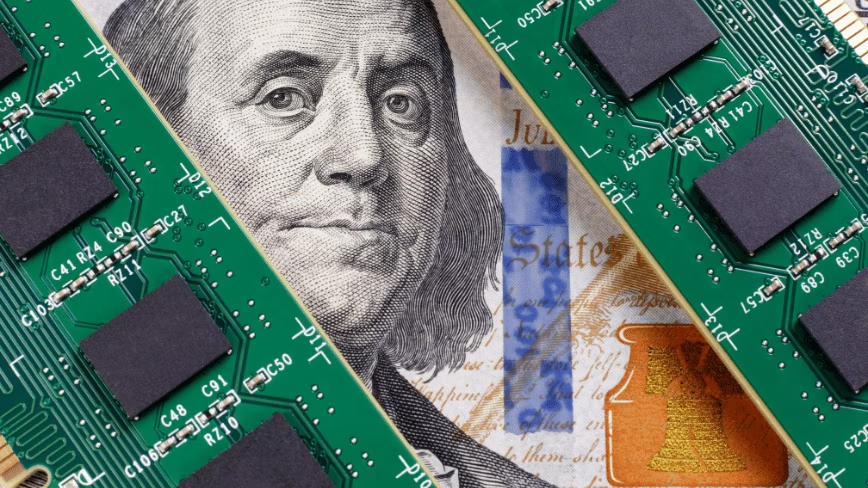
The current artificial intelligence boom has disrupted a fundamental principle of the memory market, causing prices for DRAM and NAND flash to surge unexpectedly. Historically, these memory components have followed commodity market trends, with prices typically declining over time. However, the insatiable demand driven by AI development has reversed this pattern, leading to significant price increases. Analysts predict that this "AI memory crunch" is unlikely to alleviate until 2028. This prolonged period of high prices and demand is setting the stage for a potentially severe market correction or "hangover" once the current AI-driven demand cycle eventually subsides. The long-term implications for memory manufacturers and consumers remain uncertain as the market navigates this unprecedented situation.
The unprecedented demand for memory components, fueled by the artificial intelligence boom, has created a significant supply-demand imbalance. This deviation from historical pricing trends suggests that traditional market models may be insufficient to predict future volatility. The extended forecast for market normalization, extending to 2028, highlights the deep structural shifts occurring in the technology sector. Investors and industry participants should consider the potential for both sustained high prices and a subsequent sharp correction, evaluating strategies that account for this heightened cyclical risk. Understanding the interplay between technological advancement, hardware requirements, and market economics will be crucial for navigating the evolving landscape of the memory market over the next decade.
AI-generated to prompt reflection — not editorial opinion, not advice, not a statement of fact. How this works.