AI Creates Animated Desktop Pet: A Pelican on a Bicycle
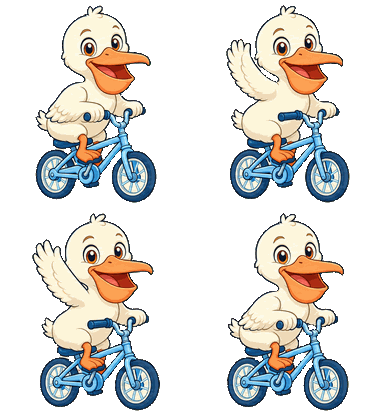
A user discovered and created a custom animated desktop "pet" in Codex Desktop, a small robot resembling Clippy, which can be personalized. The user opted to create a "Pedalican," a pelican riding a bicycle, which now provides updates on Codex tasks. The creation process involved GPT-5.6 Sol, which used multiple iterations with gpt-image-2 to generate the necessary sprite assets for the animation. The user documented the entire process, making all generated images, sprite sheets, and animation loop GIFs available on a GitHub repository. This included the initial character reference image, which was generated from a prompt specifying a "compact adorable baby pelican with a round cream-white body, soft coral-orange bill and feet, riding a tiny sky-blue bicycle" on a magenta background. The user was particularly interested in the application of image generation for creating game-ready sprites. The key components of this mechanism, specifically the "hatch-pet" and "imagegen" skills from OpenAI, are open-source under the Apache 2.0 license. GPT-5.6 Sol is also credited with devising the name "Pedalican" for the pet.
AI's capability to generate custom animated assets from simple text prompts signifies a shift in digital content creation, democratizing the design of interactive elements. This event highlights the evolving synergy between large language models and image generation tools, enabling users with minimal technical expertise to produce complex visual assets. The open-sourcing of the underlying skills suggests a trajectory towards collaborative development and broader adoption of generative AI in personal computing and application design. As AI systems become more adept at interpreting creative intent and translating it into visual and interactive forms, we can anticipate a future where personalized digital experiences are easily customizable, potentially blurring the lines between user and creator.
AI-generated to prompt reflection — not editorial opinion, not advice, not a statement of fact. How this works.