AI Firm Anthropic Adds Former Fed Chair Ben Bernanke to Oversight Trust
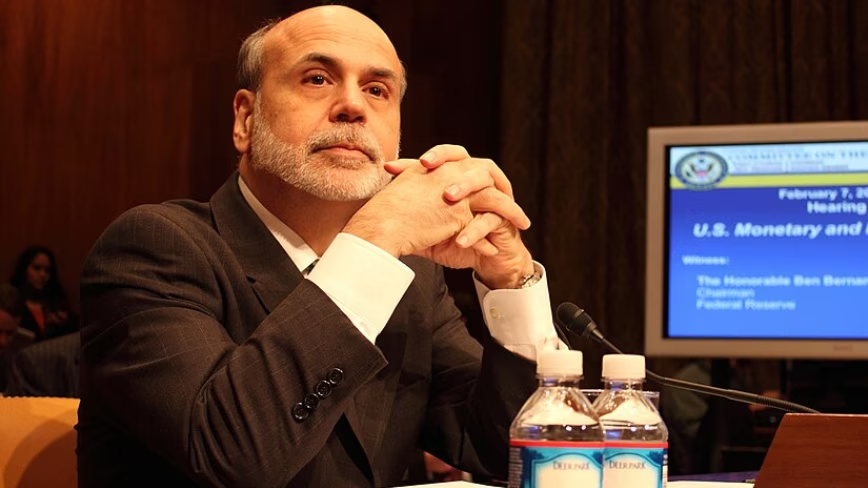
Artificial intelligence company Anthropic has appointed former Federal Reserve chair Ben Bernanke to its Long-Term Benefit Trust. The announcement was made on Thursday, signaling an effort to bolster the credibility of the body tasked with overseeing the company's ethical development. Bernanke served as the head of the Federal Reserve from 2006 to 2014, a period that included navigating the significant challenges of the 2008 financial crisis. His extensive experience in economic policy and crisis management is expected to lend significant weight to Anthropic's governance structure. The Long-Term Benefit Trust is designed to ensure the company adheres to principles that prioritize long-term societal well-being, particularly as AI technology advances rapidly. This strategic appointment aims to provide a high level of oversight, drawing on Bernanke's deep understanding of complex financial systems and their broader economic impacts. The inclusion of a figure with such a distinguished public service record underscores Anthropic's commitment to responsible AI innovation.
AI Safety initiatives are increasingly seeking high-profile figures from traditional governance and economic sectors to lend credibility and expertise to their oversight mechanisms. The appointment of Ben Bernanke, a former Federal Reserve chair with experience managing systemic financial risks, suggests a recognition by Anthropic of the profound societal implications of advanced AI. This move reflects a broader trend where emerging technologies are being subjected to governance frameworks inspired by established institutions. Such appointments can help bridge the gap between technological advancement and public trust, but the actual effectiveness will depend on the trust's autonomy and enforcement powers. The challenge lies in translating economic crisis management principles to the novel risks posed by AI, which operate on different timelines and with potentially more unpredictable emergent behaviors. This highlights the evolving landscape of AI governance, where interdisciplinary expertise is becoming crucial.
AI-generated to prompt reflection — not editorial opinion, not advice, not a statement of fact. How this works.