AI-Generated Historical Videos Raise Concerns Over Authenticity
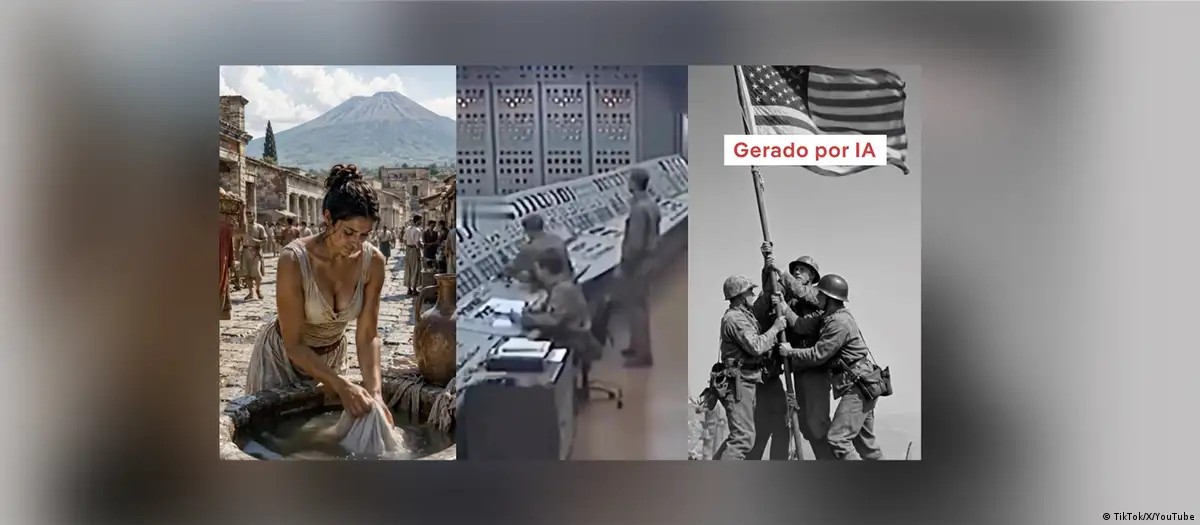
Artificial intelligence is increasingly being used to create convincing historical videos, including depictions of World War II events and the Chernobyl nuclear disaster. Researcher Roland Meyer suggests this trend aims to fill perceived gaps in historical visual records, but he cautions that this may be a misleading promise. While some AI-generated content is easily identifiable through watermarks or platform warnings, AI tools are rapidly evolving, making their output more sophisticated and harder to detect. Therefore, critical analysis of historical visuals remains essential.
Several examples highlight the issue: a TikTok video depicting Pompeii before, during, and after the Vesuvius eruption, which exhibits AI characteristics like unnatural movement and anachronistic appearances. Another video on X, purportedly showing surveillance footage from the 1986 Chernobyl disaster, was identified as AI-generated via community notes. A YouTube video created with Veo AI, based on the iconic Iwo Jima flag-raising photograph, adds unverified details and presents a patriotic narrative, diverging from the static, authentic photo. These AI creations often blend fact and entertainment, potentially sparking interest in history but also presenting a simplified and certain view of the past that may not reflect its complexities.
Historians like Jürgen Zimmerer warn that AI interpretations can eliminate other valid perspectives, emphasizing the need for critical distance when viewing such content. Roland Meyer notes that AI-generated images often reflect present-day expectations and stereotypes rather than historical reality, as AI models train on diverse data including historical photos, paintings, and video game imagery. While controversial, AI can be used constructively; for instance, archaeologists in Pompeii collaborated with AI to reconstruct a volcanic eruption victim's appearance based on archaeological findings, aiming to make scientific research more accessible. However, these reconstructions are understood as scientific interpretations, not authentic representations.
The proliferation of AI-generated historical videos presents a complex challenge to our understanding of the past. While AI can potentially democratize access to historical narratives and fill visual gaps, its capacity to create highly plausible yet fabricated content risks distorting public memory. The underlying incentive structures for AI development often prioritize realism and engagement, which can inadvertently lead to the creation of content that appeals to present-day biases and expectations, rather than historical accuracy. This raises critical questions about digital provenance, media literacy, and the responsibility of platforms in distinguishing between authentic historical records and AI-driven interpretations. Moving forward, a multi-faceted approach involving technological solutions for detection, robust educational initiatives, and ethical guidelines for AI deployment will be crucial to navigating this evolving landscape and ensuring that AI serves as a tool for enhanced understanding, not historical revisionism.
AI-generated to prompt reflection — not editorial opinion, not advice, not a statement of fact. How this works.