AI Helps Scientists Unravel Mysteries of Supercooled Water's Structure
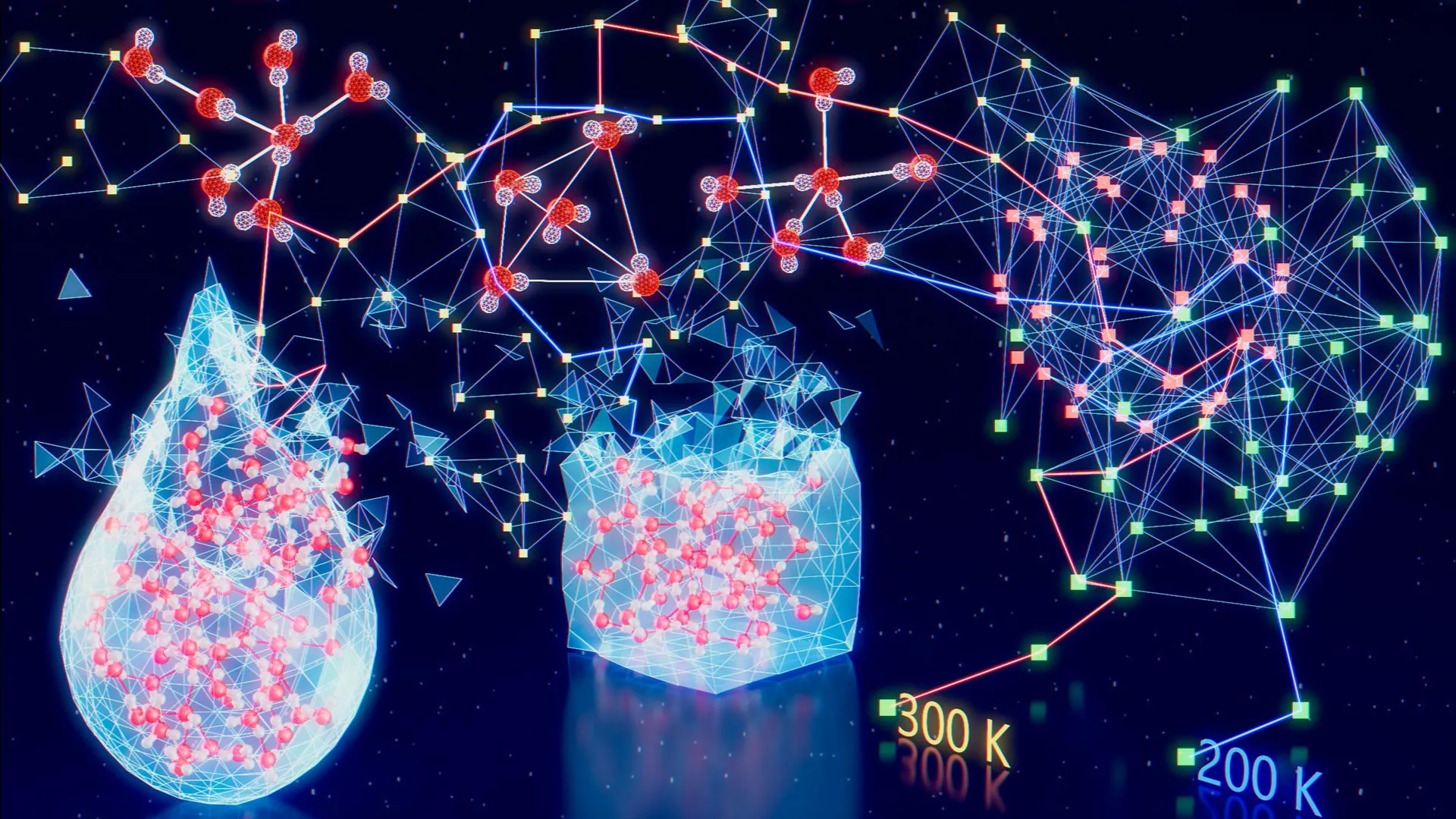
Researchers at the University of Osaka have employed an artificial intelligence model to better understand the complex structure of supercooled water. Water exhibits particularly unusual properties when cooled below its freezing point, a state known as supercooling. However, scientists have faced challenges in consistently describing the various microscopic structures water can adopt in this state. The Osaka team trained an AI model using extensive computer simulations of water's behavior. This AI system was then tasked with evaluating 16 different methods used to describe water's structure. The AI successfully identified the most effective descriptors for differentiating between water's two distinct liquid states. This breakthrough offers a more robust framework for scientists investigating the enigmatic properties of water, one of nature's most fundamental yet puzzling substances.
AI's application in scientific research, as demonstrated by the University of Osaka's work, highlights its potential to accelerate discovery by processing complex data and identifying patterns beyond human analytical capacity. By developing more precise descriptors for water's liquid states, this AI model could refine our understanding of fundamental physical chemistry, with implications for fields ranging from materials science to climate modeling. The challenge for future research will be to validate these AI-driven insights through experimental methods and to explore how similar AI approaches can be leveraged to tackle other intractable scientific problems, potentially leading to novel technological advancements.
AI-generated to prompt reflection — not editorial opinion, not advice, not a statement of fact. How this works.